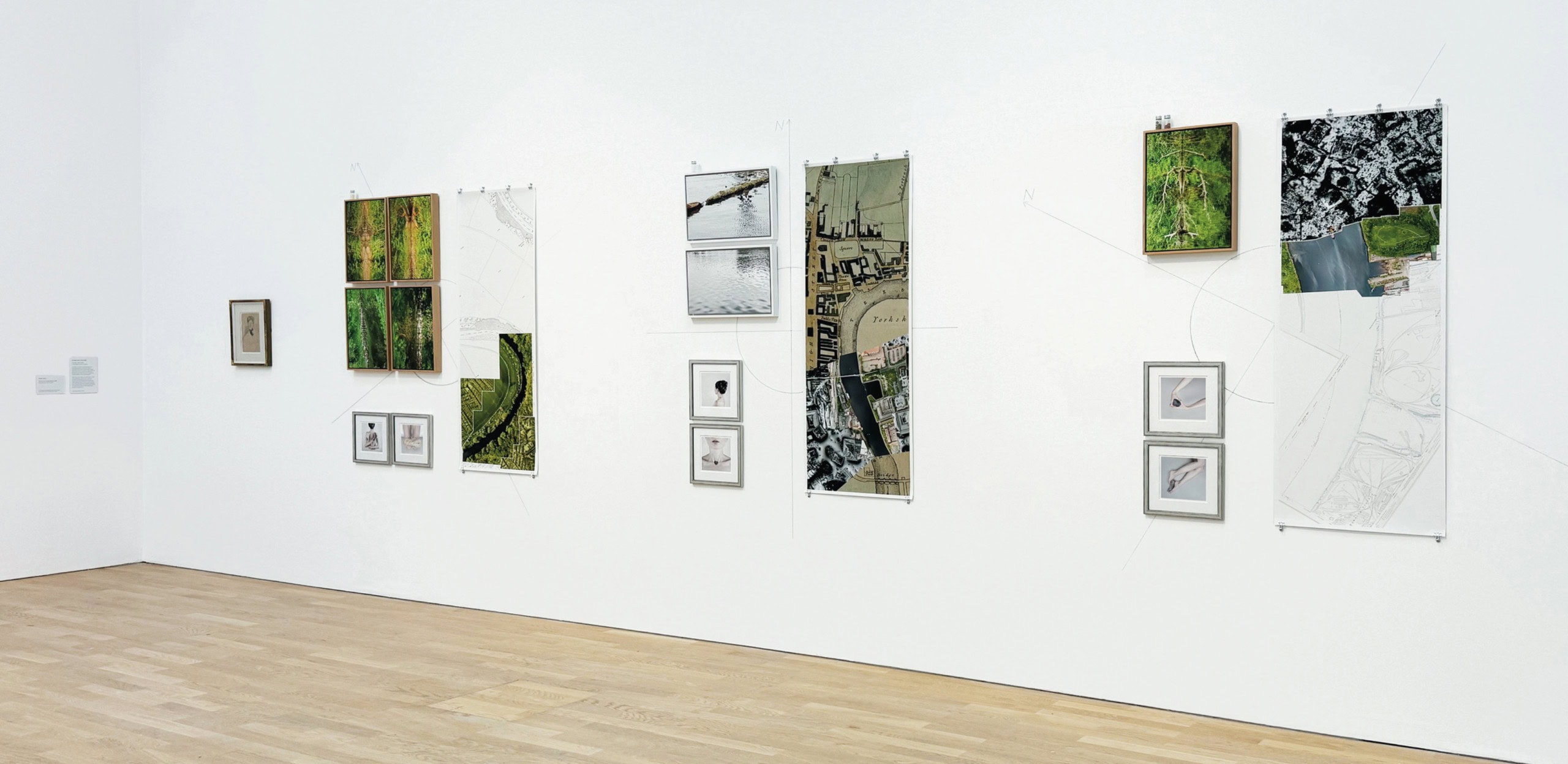
Małgorzata Dawidek, The Other Shore, project presentation at the exhibition Towards New Worlds, Middlesbrough Institute of Modern Art, curated by Helen Welford and Aidan Moesby, Middlesbrough, 2024-2025
THE OTHER SHORE
Research Process
2023-2024
Introduction
Research project commissioned by
Middlesbrough Institute of Modern Art.
The project producers and coordinators:
Helen Welford and Danni Ash.
Technique: Full colour series of photographs.
Spatial and microscopic photography.
Studio photography. Drawing.
Media: Digital print | Fine Art Hahnemühle Photo Rag
matte archival paper, 310g.
Various formats.
Pencil drawing on wall.
Triptych.
_______________________
The Other Shore is a one-year-long research project, which explores the geohistorical contexts of the Tysmienica Valley in eastern Poland, where I am originally from, and the Tees Valley, in north-east England, where I was on a study stay. At the heart of these valleys lie the Tysmienica and Tees rivers. My childhood in the Tysmienica Valley has given me a unique perspective for this work. 250 million years ago, these two regions were located on opposite sides of the Zechstein Sea, which covered a large part of today’s European continent. As a result of climate change and lack of water circulation, the sea dried up through evaporation. Its remnants, such as salts, can still be found in the earth’s natural resources in both regions. These minerals are also used to produce medicinal potassium, magnesium and iron, of which I have critical deficits in my body, so they are a crucial part of my therapy.
__
My work has a reconstructive character. It has involved examining material collected from local mines and reconstructing past landscapes and structures, thanks to the expertise and generosity of researchers and technicians – Henryk Ciosmak of the Sand, Glauconite and Amber Mine at Niedzwiada and Sue Armstrong of the Underground Laboratory at Boulby Mine. I also worked with geologist Dr Jens Holtvoeth of Teesside University School of Health & Life Sciences, Geology Department, taking microscopic images of collected minerals under polarised light.
I have spent many days walking along the River Tysmienica near Semień in Poland and River Tees in areas including Dalton-on-Tees, Croft-on-Tees, Darlington, Yarm, Stockton-on-Tees and Middlesbrough, examining changes in the shape of their banks and the structure of found artefacts from microscopic and aerial perspectives, as well as through geological, archival, historical, mythological and artistic lenses. I have also been tracing the history of the melioration of the Tees meanders using historical maps and in collaboration with Chris Corbett from the Dorman Museum.
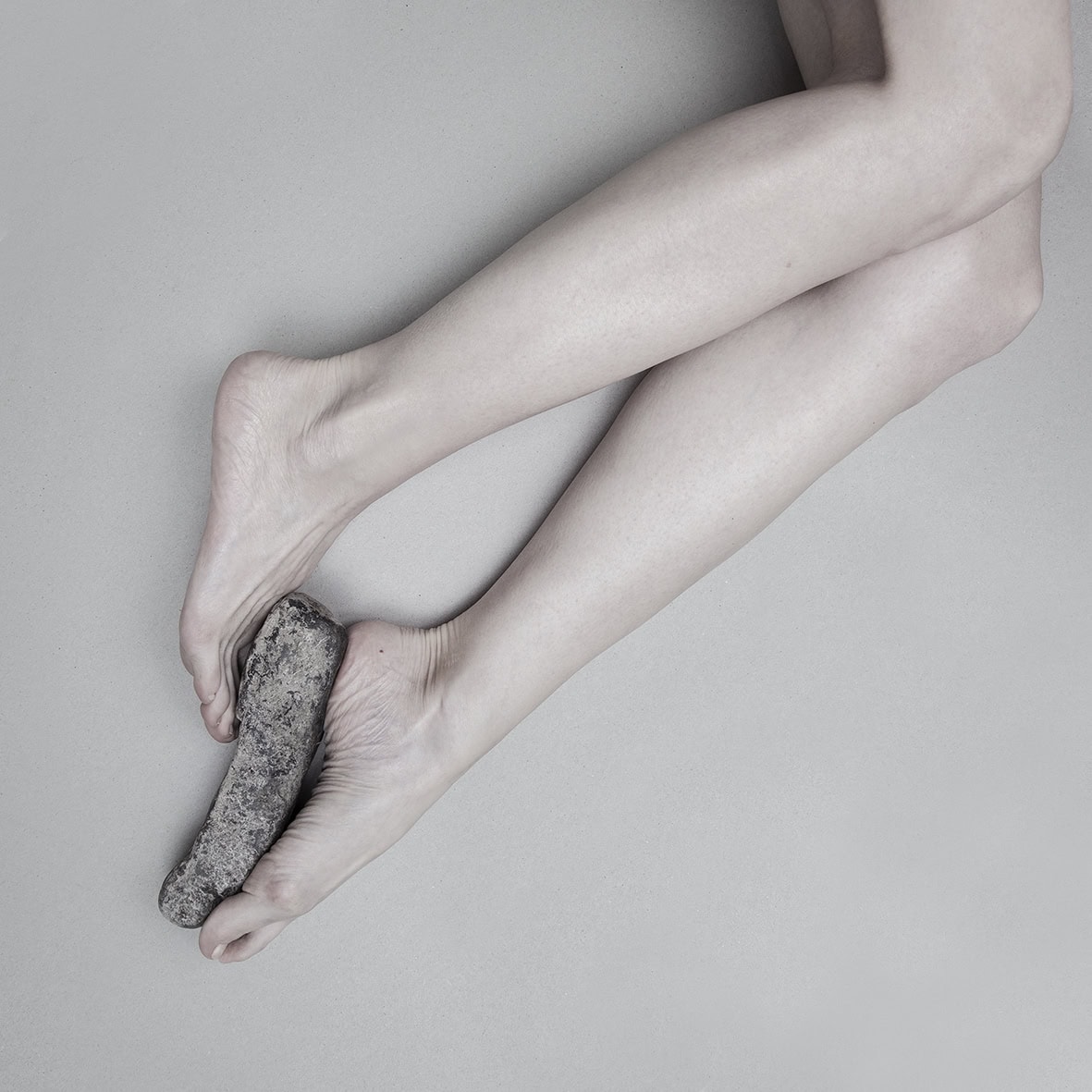
The project was created in relation to Gwen John’s self-portrait, which I found in the collection of the Middlesbrough Institute of Modern Art. Extending the concept of personal portraiture, I combined photographs of nature and its material artefacts with a studio session in which I worked in an intimate way with objects found in the river by placing them on diseased parts of my body.
__
Part I
Self Portrait
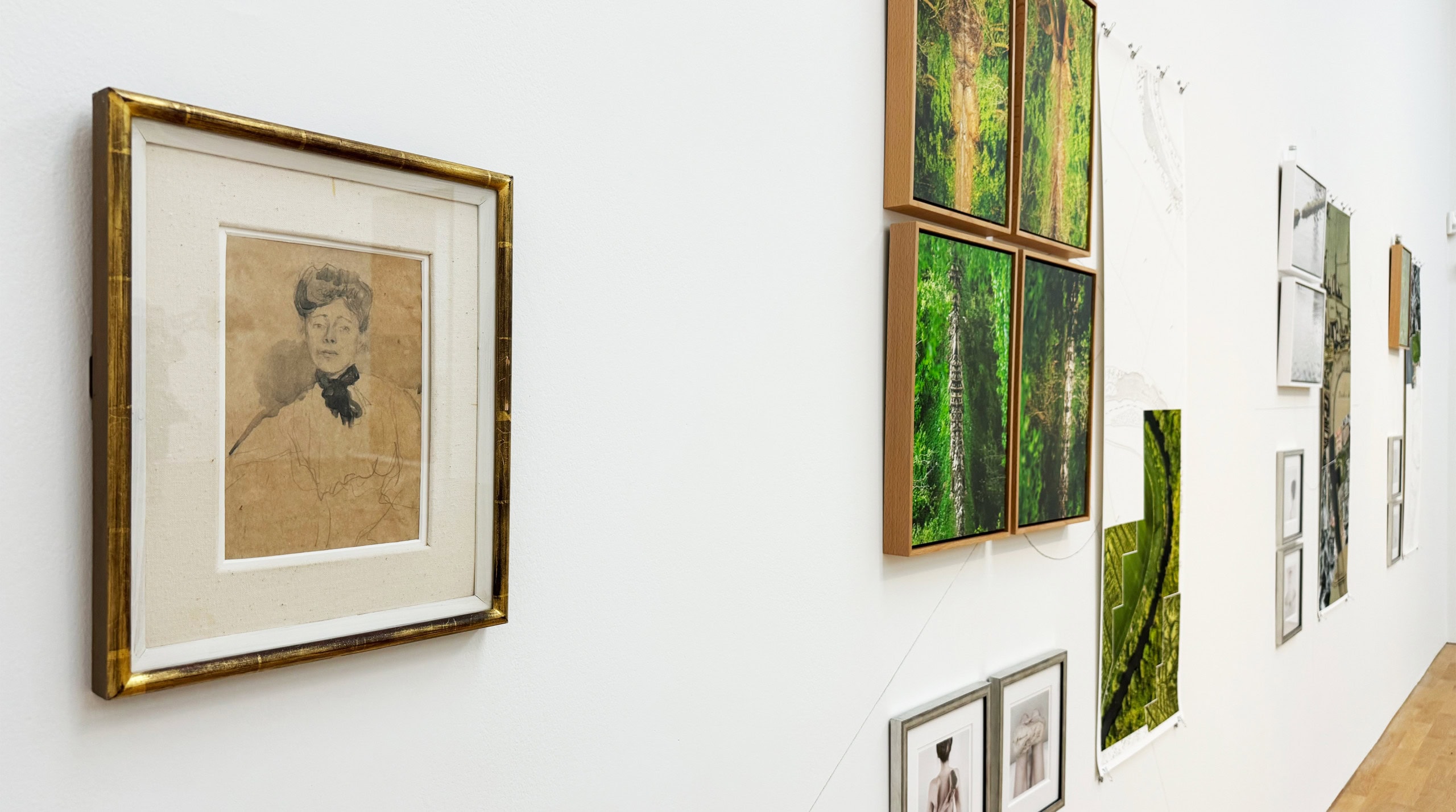
Małgorzata Dawidek, The Other Shore, project presentation at the exhibition Towards New Worlds, Middlesbrough Institute of Modern Art, curated by Helen Welford and Aidan Moesby, Middlesbrough, 2024-2025.
In 2023 I recived an invitation from the Middlesbrough Institute of Modern Art (MIMA) to create an artistic project responding to their art collection in relation to the Tees Valley environment and the human body.
Some time later, while researching the MIMA’s collection, I came across “Portrait of a Young Woman” by Gwen John, a Welsh painter active in the late 19th and early 20th centuries in the UK and France. This modest, small-scale sketch in ink and graphite is dated circa 1910. It depicts the titular young woman seated and portrayed frontally, in a half-length format extending to the waist. She wears a dress decorated with a dark bow tied at the neck. Her hair is pinned up high in a loose bun, and her hands disappear behind the right and lower edges of the frame. The study focuses on the psychology, physiognomy, and gesture of the model, who looks at the viewer with a focused gaze.
This sketch differed from the portraits of women I was familiar with in Gwen John’s practice, where she depicted her subjects in static, centrally composed poses. Here, the active line brought a sense of dynamism to many details. I could almost feel the model’s movement, as if she were subtly leaning to her right side for reasons unknown.
__
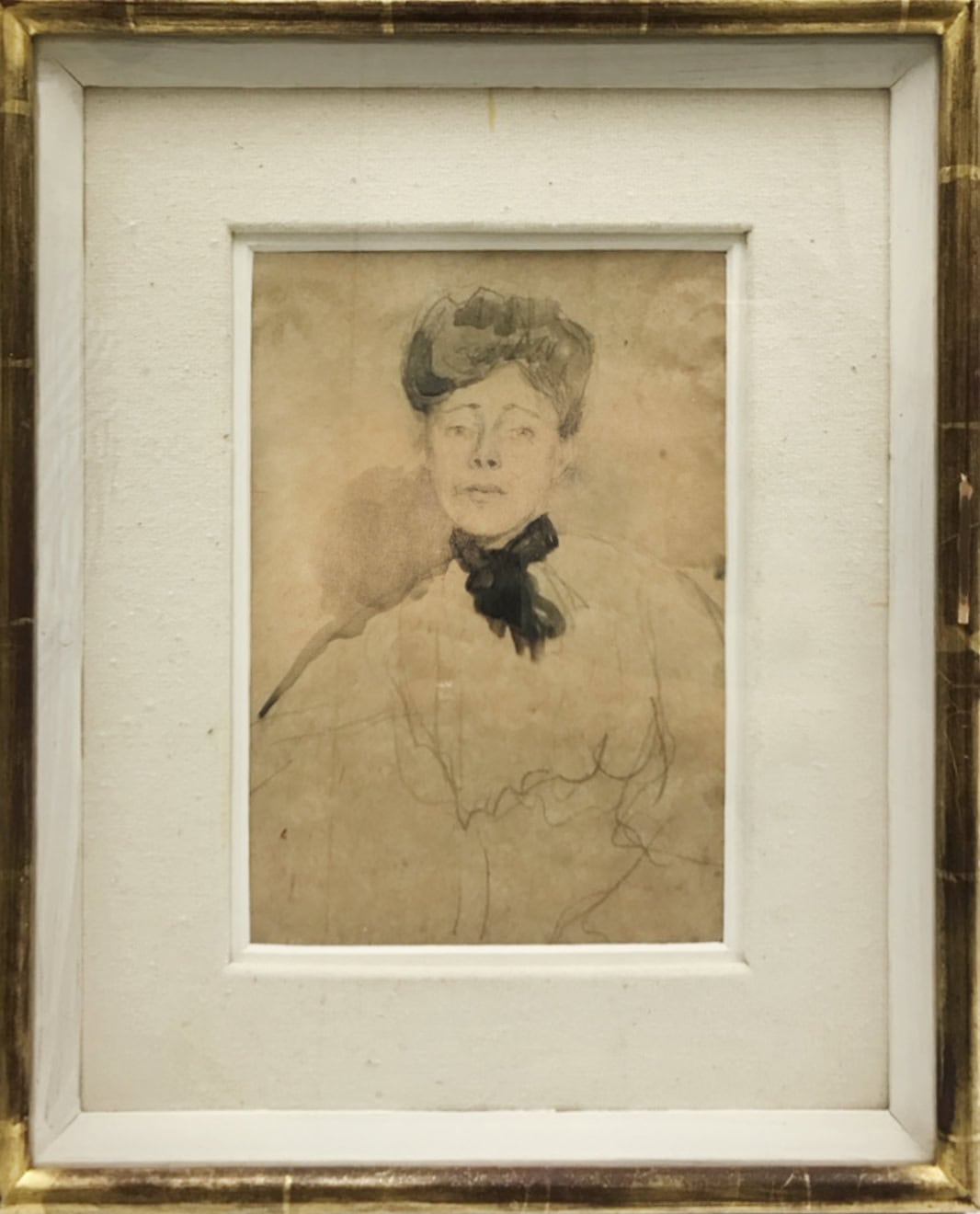
Gwen John, Self-Portrait, 1910. MIMA Art Collection.
Photo by Malgorzata Dawidek.
When I turned the work over, I noticed four labels affixed to the reverse. The first, positioned on the front and appearing to be the most recent, had been issued by Middlesbrough Art Gallery. It bore the title Portrait of a Young Woman, date: 1986, and the emblem of Middlesbrough Borough Council. Directly beneath it, another label indicated that Portrait of a Young Woman had been sold to the gallery’s collection by Mercury Gallery on 28 May 1986. Below that was a third label, signed by Roland Browse & Delbanco, the previous owner of this work, which was titled Portrait. At the very bottom was the oldest and most worn label, issued by the Arts Council of Great Britain, which identified the sketch by John as Self-Portrait.
This accidental journey back in time, made possible by the work’s meticulously annotated fate by successive gallerists, not only led me to its original title but also shifted my entire perspective on John’s sketch. It was no longer a portrait of an anonymous young woman, but became a self-portrait of Gwen, who was around 34 years old when she created it. I saw in it an artist examining her physiognomy, searching for a visual form that would go beyond the methods she had previously developed for portraying women. I perceived that her focused gaze directed towards the viewer may have stemmed from looking at her own reflection in a mirror, while the arrangement of her hands and the slight leaning of her body suggested the presence of a draughtswoman at work. Gwen was not only looking outwards at the viewer—she was also looking at herself, inward, trying to learn more about herself.
The self-portrait by Gwen John, whose work I had studied and who felt close to me, through the fact that we both graduated from the same university – the Slade School of Fine Art in London – and we both had the experience of a migrant artist – she in France and I in England – set a crucial direction for the work I was developing in response to a commission from the Middlesbrough Institute of Modern Art. Namely, it allowed me to consider how I could portray my body in relation to the Tees Valley landscape in ways different from the approaches I was familiar with, to respond to MIMA’s invitation. How can I tell a different story of corporeality without referring to the usual conventions, forms and methods of creating and presenting self-portraits? What is a self-portrait, or what might it become?
__
Part II
Body and/as Landscape
In observing my body and the landscape of Teesside, I focused on their less obvious interconnections revealed through this act of temporal displacement. This allowed me to uncover and portray both our external and internal landscapes. My work with the map of the body and the map of place evolved by tracing links between the body and the earth’s materiality, both at an elemental and a panoramic level. I depicted myself and the land on a micro and macro scale, using various, often contrasting tools and techniques: microscope and drone, drawing and sculptural object, photography and cartography, field recordings and intimate studio work—capturing their present states and reconstructing their layered pasts.
The search for a connection between the body and nature took me 250 million years back in time, to the Permian period, when neither the Tees Valley nor I yet existed. Nor was there even the island now known as the United Kingdom, and Europe was part of the supercontinent Pangea. It encompassed most of the Earth’s landmasses and was surrounded by a single ocean. As the supercontinent started to rift apart, the Zechstein Sea began to form. It was a vast, relatively shallow, and isolated inland sea, unrelated to the Baltic Sea. It was located in what we now call Northwest Europe, and its two shores stretched from the eastern coast of today’s England through the current Denmark and Germany to the eastern border of modern Poland. One of them reached into the Tees Valley, which did not exist then, and came under the present-day area of Middlesbrough and County Durham, where I was now carrying out my project. The other shore touched the area, then the non-existent Tyśmienica Valley in eastern Poland, where I was born 250 million years later.
The Zechstein Sea was a vast basin — a so-called saline giant — that eventually dried up due to the evaporation process driven by climate change and a lack of water circulation. As the seawater evaporates, it leaves behind mineral deposits of chemical salts that form rock layers. The Zechstein Sea remnants, such as potash, sodium chlorides, and magnesium salts — minerals that enrich soil and sustain life — are still preserved within subsurface geological formations across much of Central Europe and beneath the North Sea and can still be found in minds of the English East Coast.
My personal connection to the Tyśmienica Valley, where I spent my childhood, has offered a unique perspective on my creative process. It stirred memories of running barefoot through my grandparents’ backyard, unaware of how rich this land was in potassium, magnesium, and iron — minerals that would later become critically deficient in my body due to ultra-rare health conditions. The abundance of this area led to its inclusion in the Nature 2000 – an international nature conservation programme. A few years ago, on the edge of this magical terrain, in the nearby village of Niedźwiada, an open-pit mine was established for glauconite, a clay-based mineral rich in the elements I lacked. They derive from Eocene marine strata (56–33.9 Ma), also known as the Mid-European Late Eocene Basin. This extensive epi-continental sea covered large areas of present-day Ukraine, Poland, Germany, and France, and was paleogeographically connected to the North Sea Basin, reaching the southeastern coast of England. The deposits left behind by this vast basin in Niedźwiada occur alongside amber-bearing sediments, providing clear evidence of its origin, including traces of forests that once blanketed this region millions of years ago.
Part III
From the Zechstein Sea to Mid-European Late Eocene Basin
__
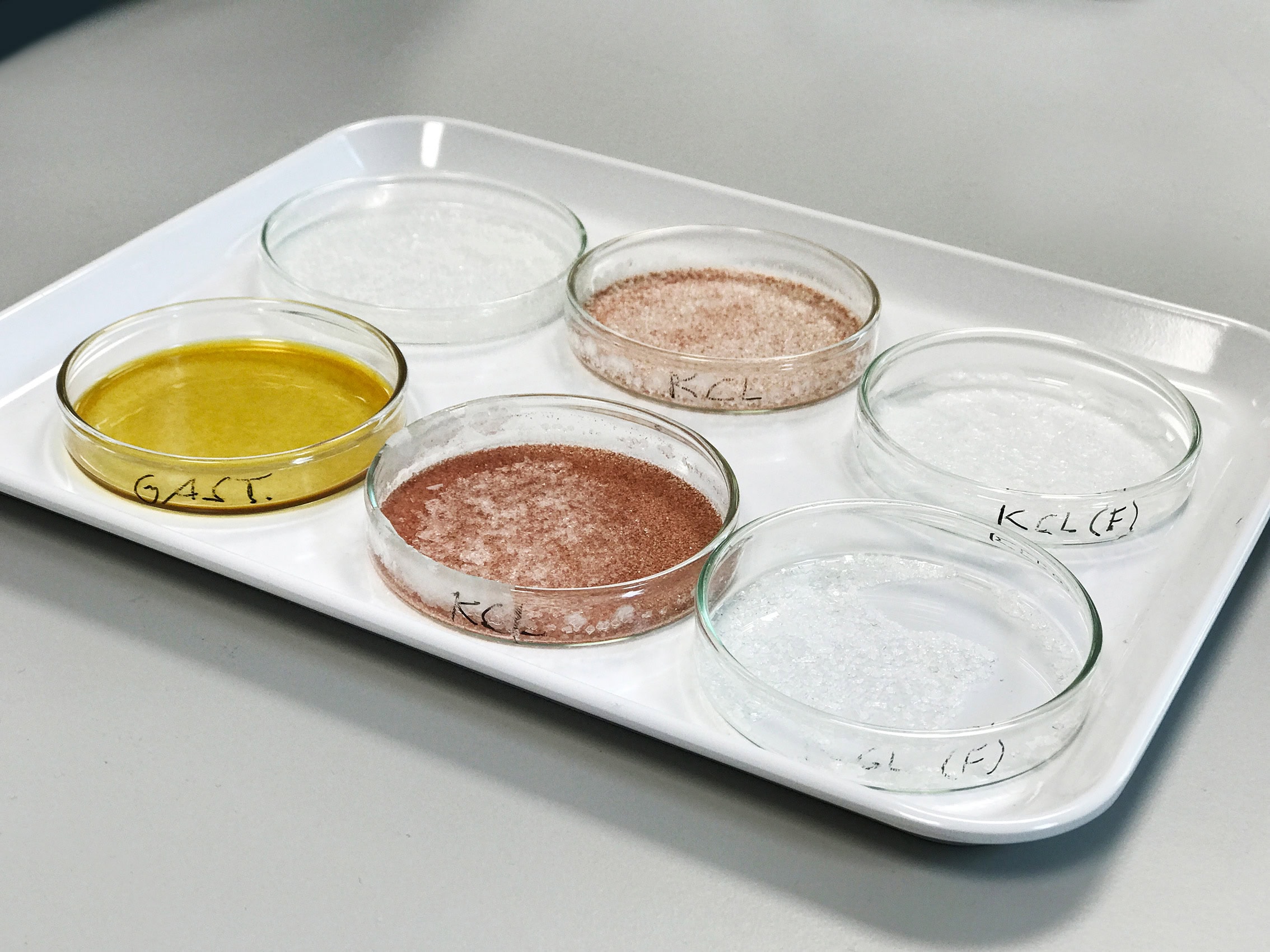
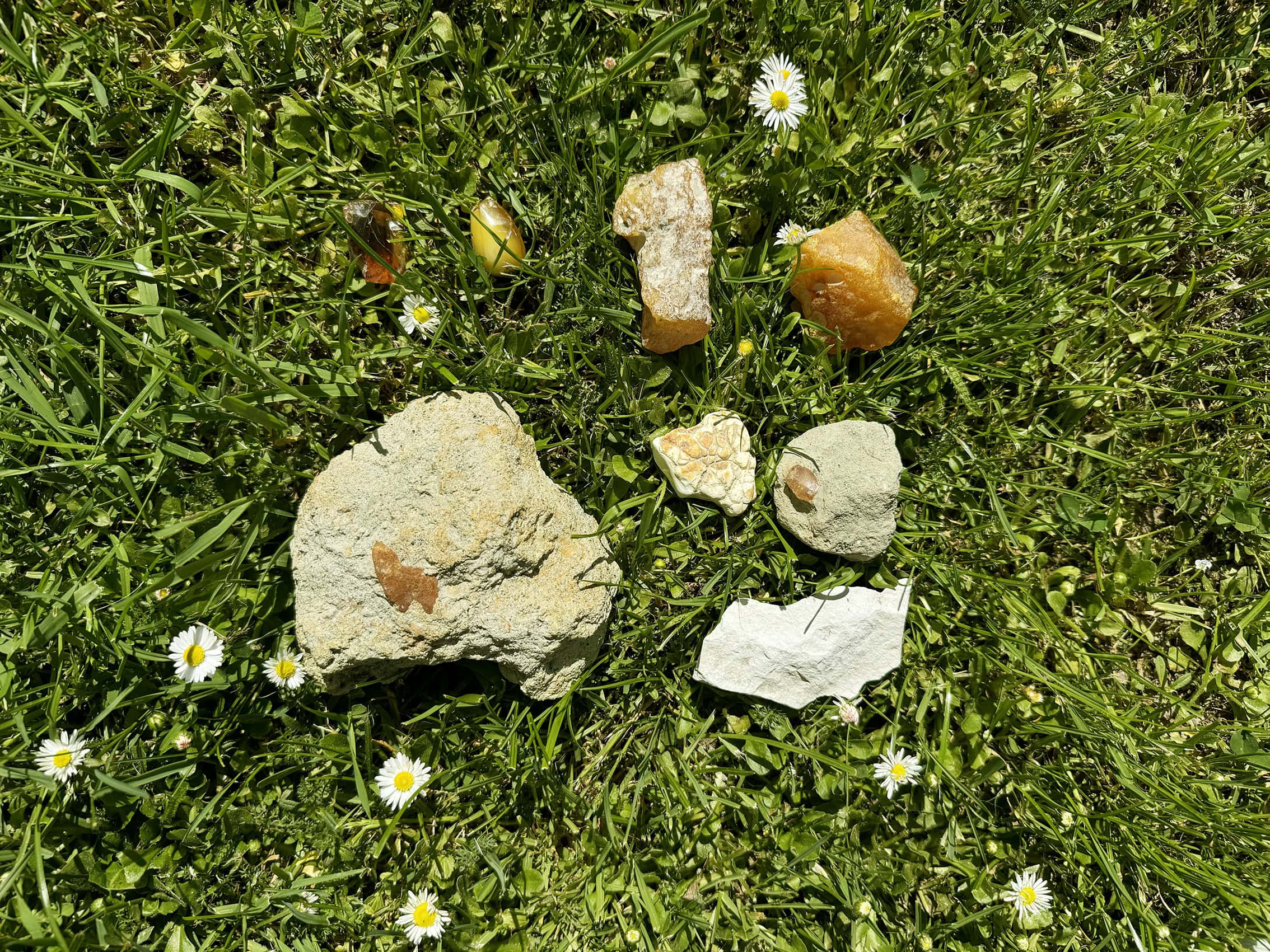
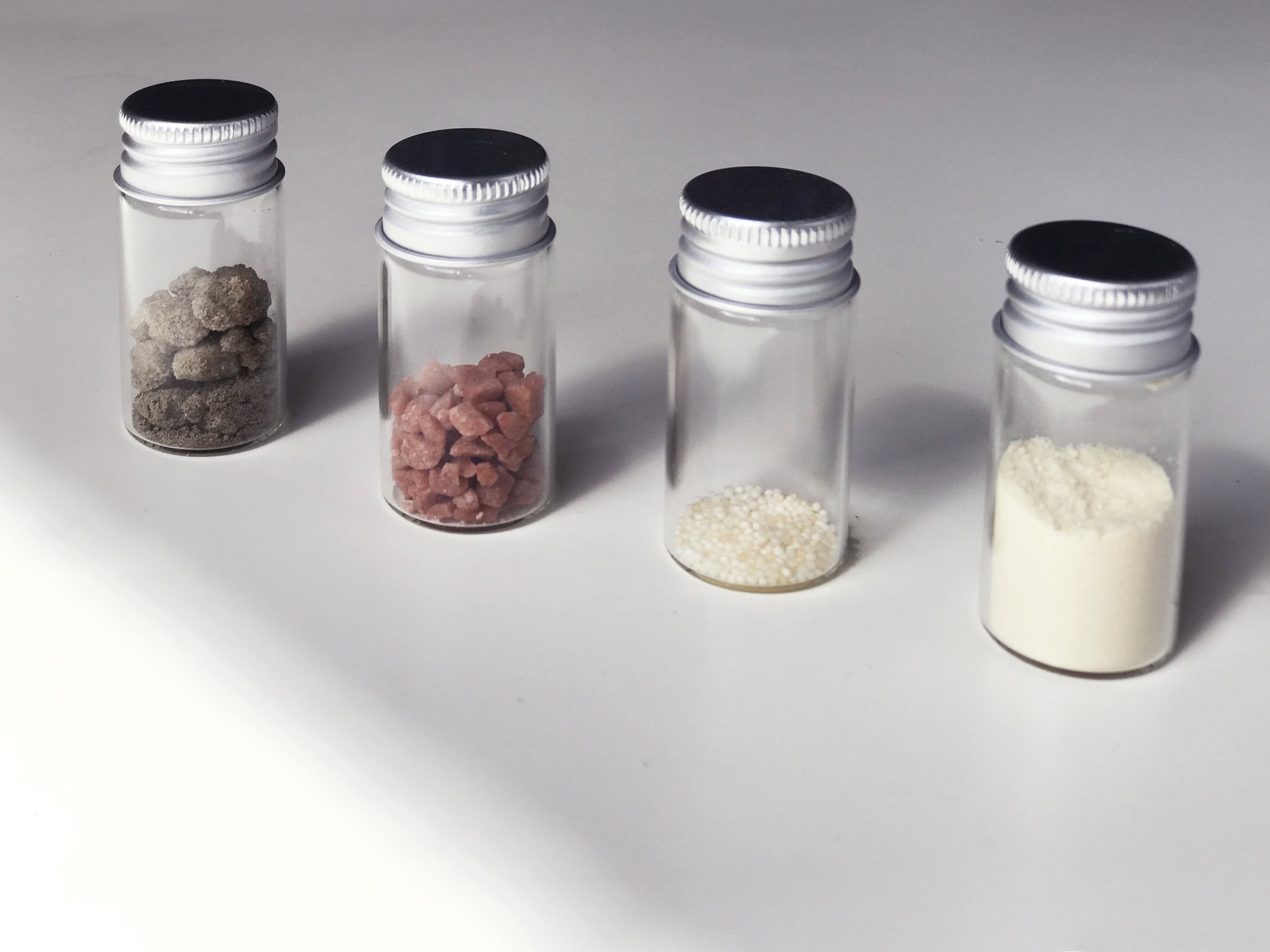
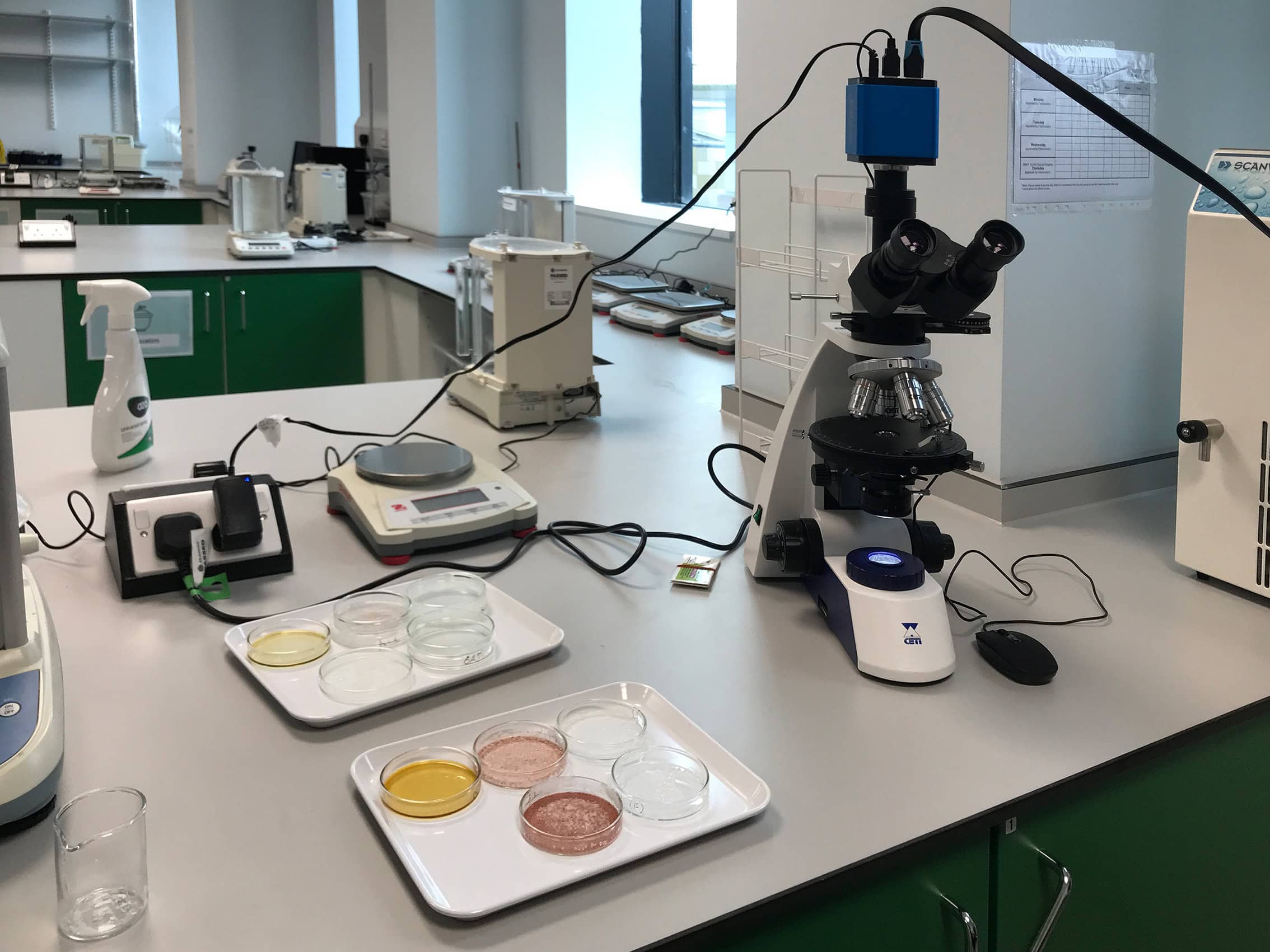
These two landscapes – of eastern Poland and eastern England, though geographically distinct, are linked by a shared mineral legacy rooted in deep geological time. In both regions, the imprint of ancient seas — the Mid-European Eocene Basin and the Permian Zechstein Sea — is expressed through different potassium-bearing minerals: through glauconite in the Eocene marine sediments of Poland, and through potash derived from the Permian Zechstein evaporites in England. The first one is excavated in the Niedźwiada Mine. I encountered the latter at the Boulby Underground Mine. In both cases, potassium-rich materials are primarily used as fertilisers, as potassium plays a crucial role in regulating the movement and storage of solutes within plants — a function often compared to the circulatory system in animals and the human body.
My story of corporeality, which is depicted against the backdrop of the Tees Valley, thus took the form of a self-portrait from within matter. It became an isotropic landscape, grounded in the homogeneity of structures. On one side, these are mineral and salt formations extracted from the Niedźwiada and Boulby mines; on the other, the medications derived from those substances, which, having become an integral part of my body, condition its daily functioning.
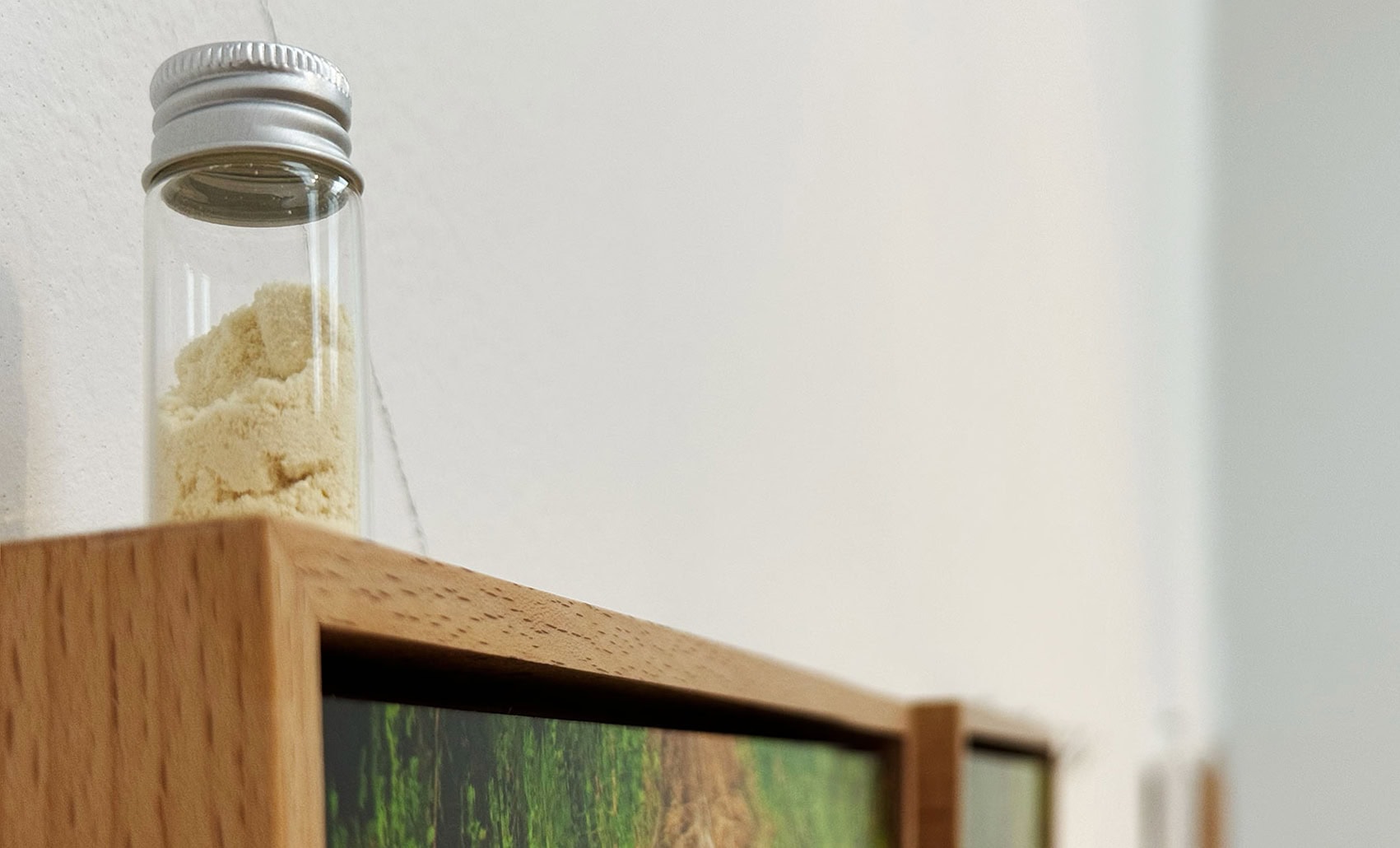
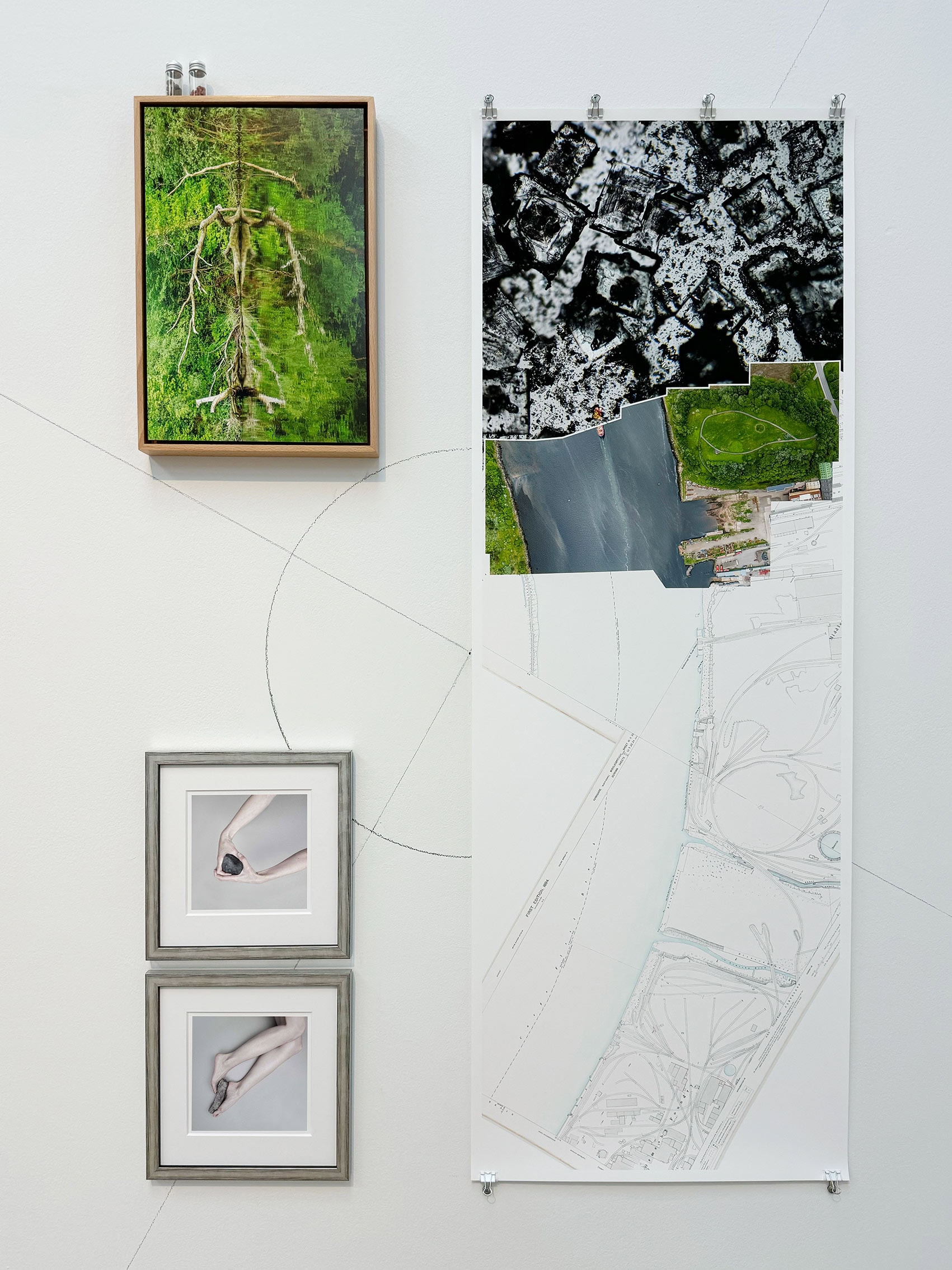
I examined materials collected from local mines thanks to the expertise and generosity of researchers and technicians — Eng. Henryk Ciosmak from the Sand, Glauconite, and Amber Mine in Niedźwiada and Dr Sue Armstrong from the Underground Laboratory at Boulby Mine. While capturing microscopic images under polarised light, I also collaborated with geologist Dr Jens Holtvoeth from the School of Health and Life Sciences at Teesside University. The structures of potash resemble black-and-white crystals. Their shapes assemble into luminant geometric patterns — at times forming sharp, cubist compositions, only to soften into an organic mass at the boundary between body and stone. Their blackness is never absolute: it is broken by flashes of gold, copper, and red. In contrast, the architecture of medical potassium evokes branching fir-tree twigs, resembling lush green meadows and sweeping forested lands.
Above: Samples of potash, gluconite and medicinal potassium, magnesium, iron and sodium, as well as fragments of amber preserved in gluconite.
Part IV
Dalton-on-Tees and Croft-on-Tees
_
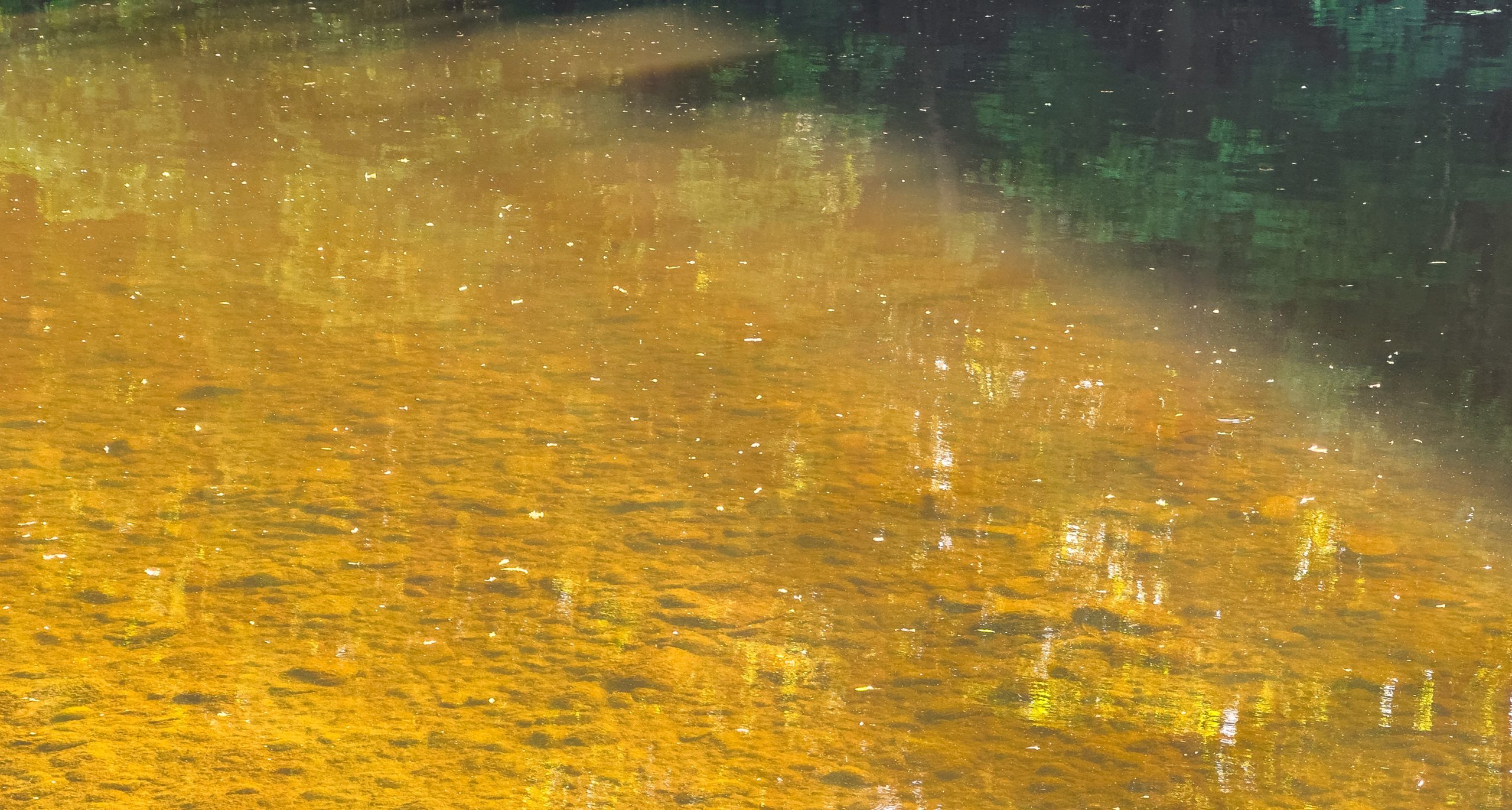
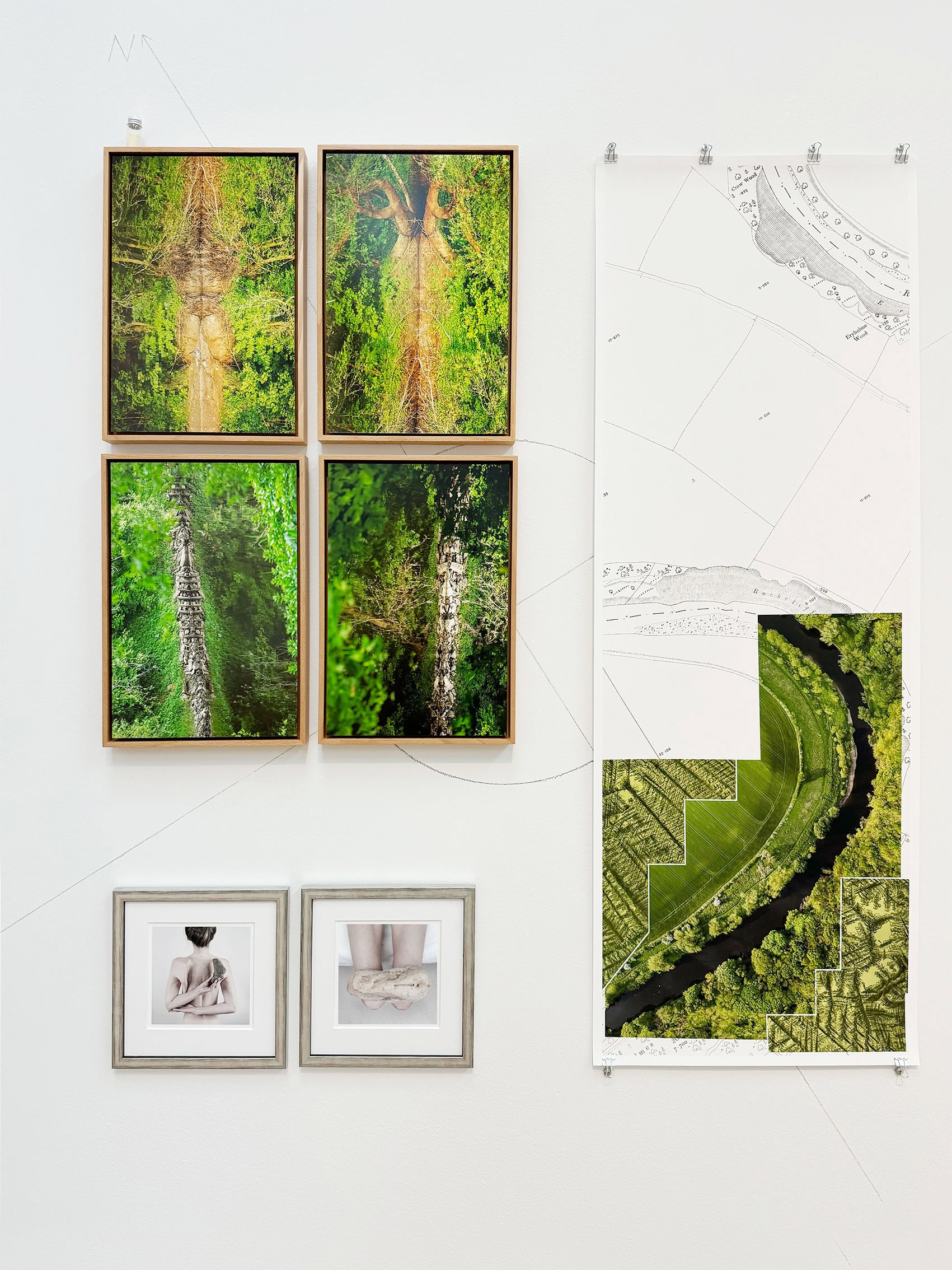
These microscopic images naturally resonated visually with the next layer of my self-portrait — the structures of the Tees and Tyśmienica Valleys terrains, with the rivers Tees and Tyśmienica at their hearts. While working on my project, I spent days walking along the Tees, from Dalton-on-Tees through Croft-on-Tees, Darlington, Yarm, and Stockton-on-Tees to Middlesbrough, exploring its banks and landscapes. I photographed its body and surroundings on a micro- and macro-scale, documenting the river’s movement and reflections. Observing its meanders from a bird’s-eye view, I took dozens of aerial photographs from a height of 120 metres to compose one image capturing the wider terrain. Thanks to a collaboration with cartographer Chris Corbett from the Dorman Museum, I had the opportunity to study the historical transformation of these lands and compare the changes the river has undergone over the last 400 years, juxtaposing my photos with archival maps of the same places.
The River Tees begins in the North Pennines, flowing 85 miles to the North Sea and carving meanders through the landscape of North East England. Near Croft-on-Tees — a village named for its ‘small enclosed field’, reflecting its location surrounded by the river — the Tees’ mineral-rich waters gained a reputation for their healing properties. They inspired the establishment of a spa in 1668. By 1782, the water was being sold in London as a remedy for various illnesses, praised by Dr Robert Willan. My first work, paired with a map of Dalton and Croft-on-Tees, created in 1912, highlights places where history and geography are thoroughly intertwined. The Tees continues to shape the land, offering a restorative legacy that links past and present through its life-sustaining flow, a vital thread within the region’s abundant natural fabric.
Part V
Stockton-on-Tees
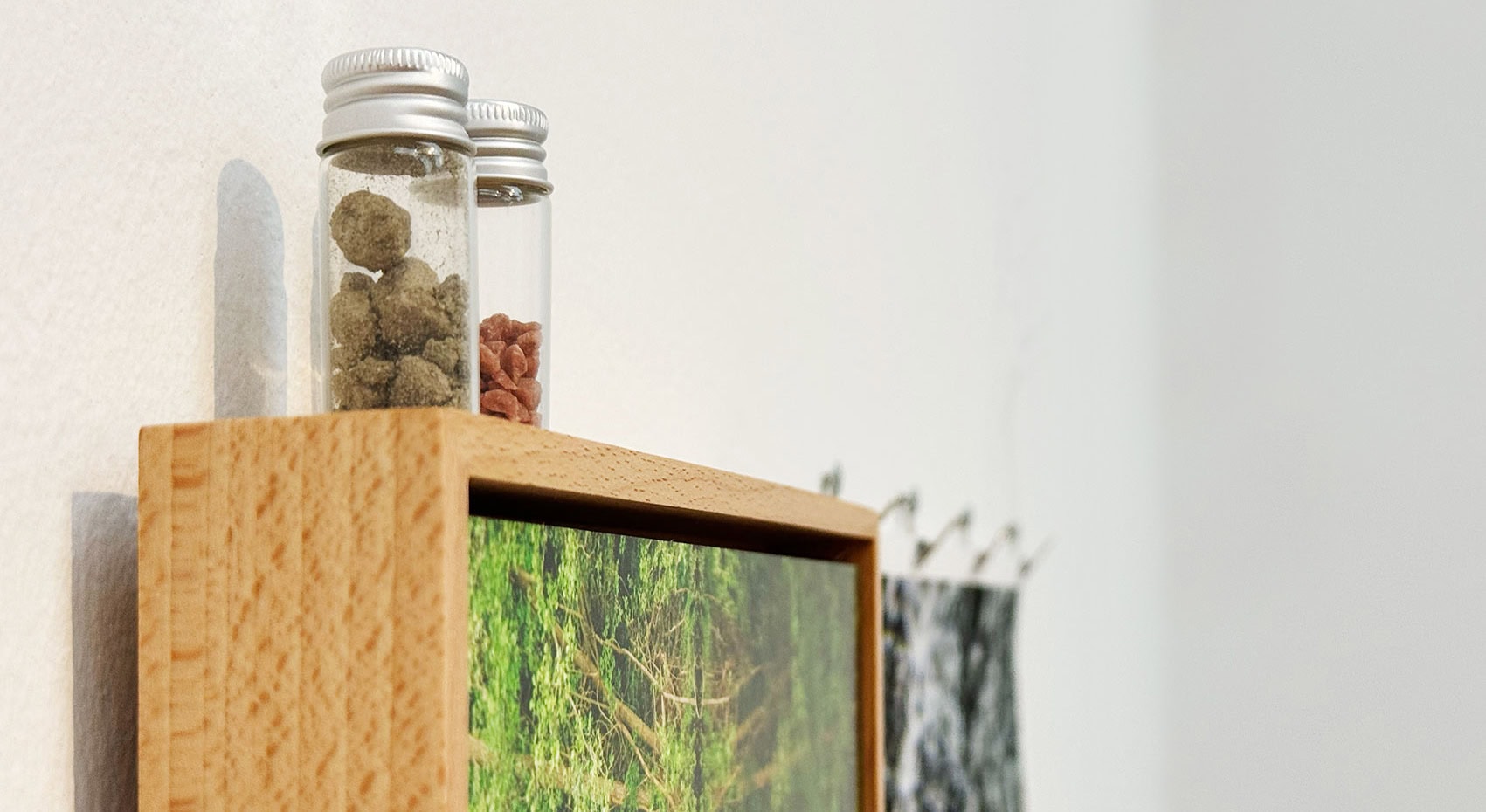
Małgorzata Dawidek, The Other Shore, detail (glauconite and potash samples).
_
Another aerial image, which I matched with an 1828 map, depicts Stockton-on-Tees — a place where the course of the Tees was straightened to allow larger ships to access the town. They also reveal how the river’s eastern bank, now developed, remained uninhabited at the time. Since the construction of the Tees Barrage in 1995, the river’s water level in Stockton has been permanently maintained at high tide.
This engineering intervention transformed the riverside into a backdrop for public events, facilitating a range of water sports, including rowing, canoeing, jet skiing, and boat racing.
__
Part VI
Teesmouth: Middlesbrough
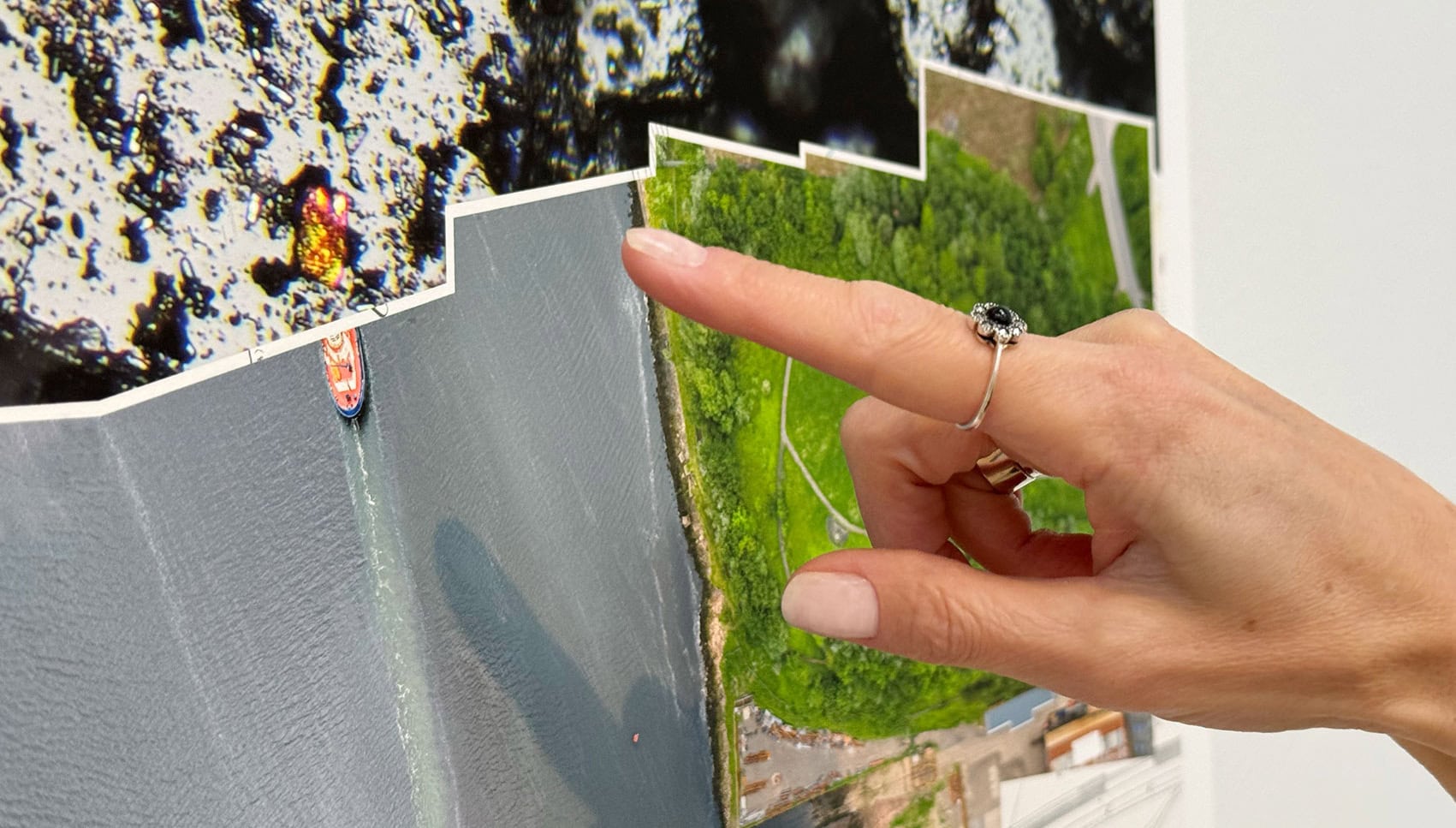
Małgorzata Dawidek, The Other Shore, detail.
_
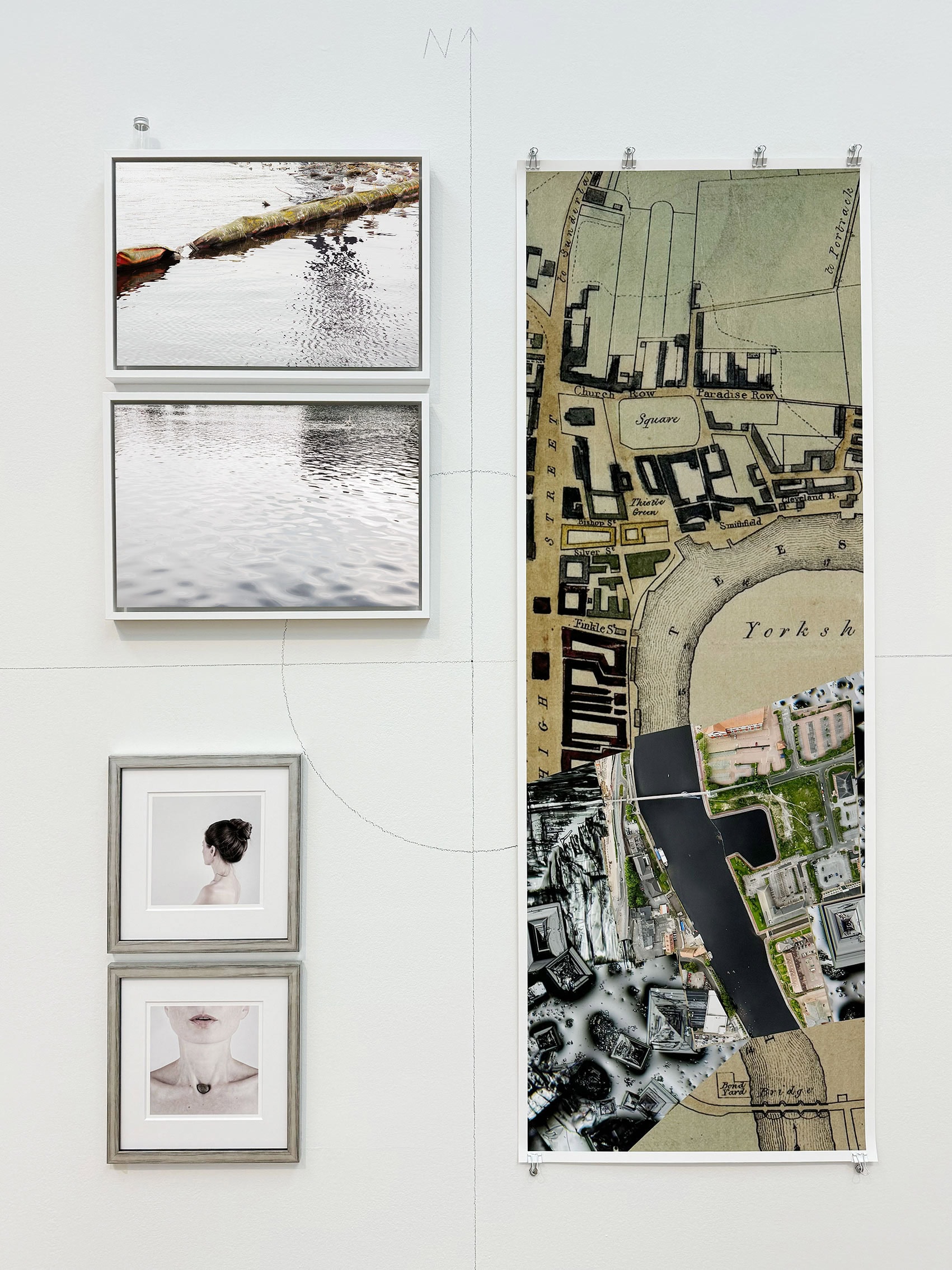
The third image of the River Tees reflects its dramatic and complex history, shaped by industrialisation – coal mining, steel production, shipbuilding, and associated river transport. Near Middlesbrough, the river was widened and deepened, leading to the loss of 90% of its natural habitat. Decades of human activity darkened its waters and altered its course. My photograph captures the Tees in its final stretch before reaching Teesmouth, where it flows into the North Sea. Despite this legacy of intensive development, Teesmouth remains an area of significant ecological importance, home to Sites of Special Scientific Interest such as North Gare and Seal Sands. North Gare—a coastal spit—shelters dune systems and expansive mudflats that support a rich diversity of birdlife and saltmarsh vegetation.
__
Seal Sands, once reclaimed as an industrial complex for the chemical sector, is now the Seal Sands Nature Reserve site. This reconstructed wetland is part of a broader effort to revive the Tees Estuary’s lost ecosystems, proving that nature can adapt, persist, and flourish under adverse conditions. I juxtaposed my aerial photograph with a historical map of this place from 1894, which reveals a riverscape dense with wharves, ferry docks, and rail lines that once thrived along the banks. The Tees tells a story of transformation and resilience—a narrative I mirrored through images of potash, a substance still transported through Teesport. It stands as a mineral thread linking the region’s industrial past to its environmental renewal.
__
Part VII
Returning to Gwen: Studio Work
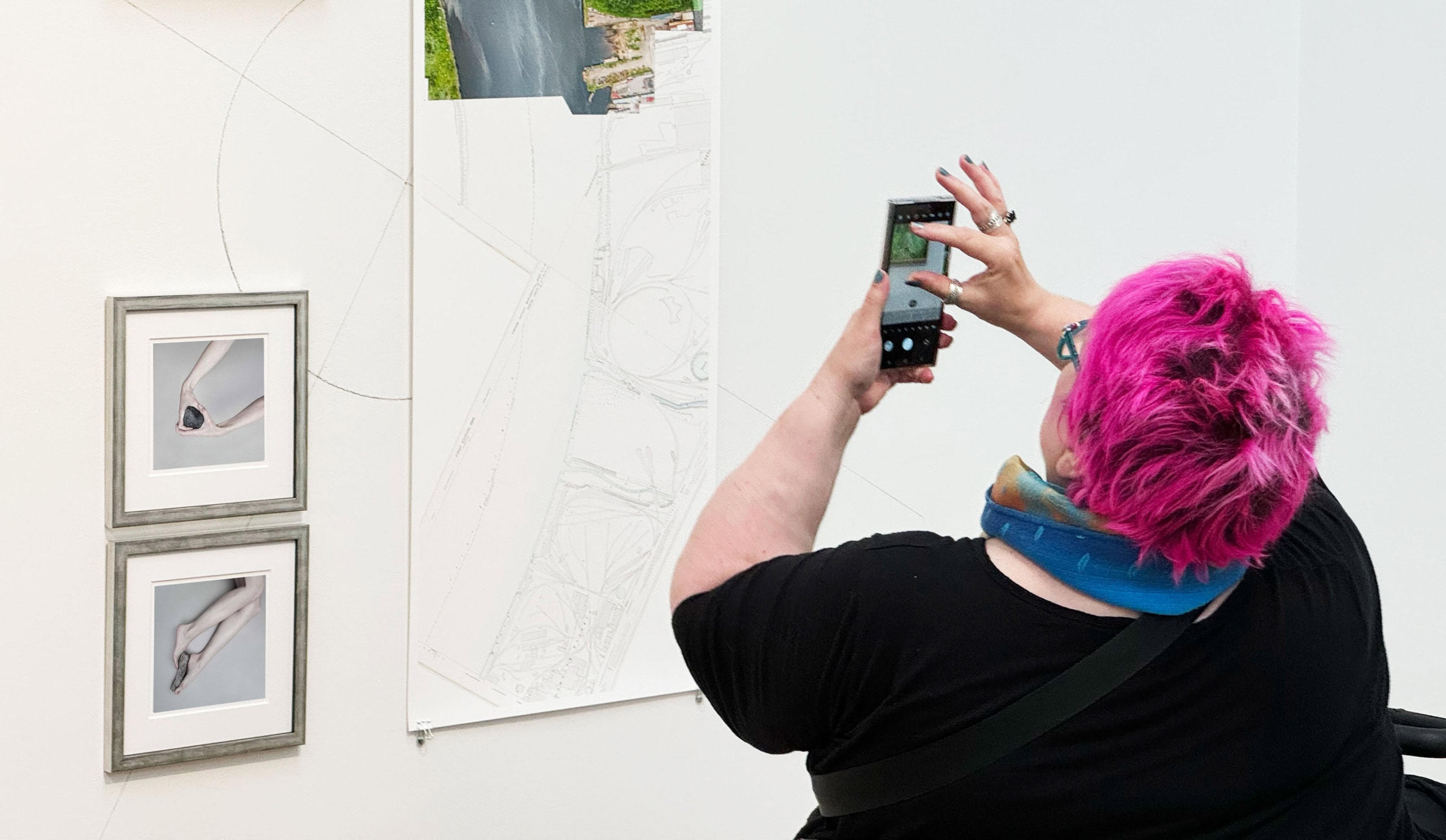
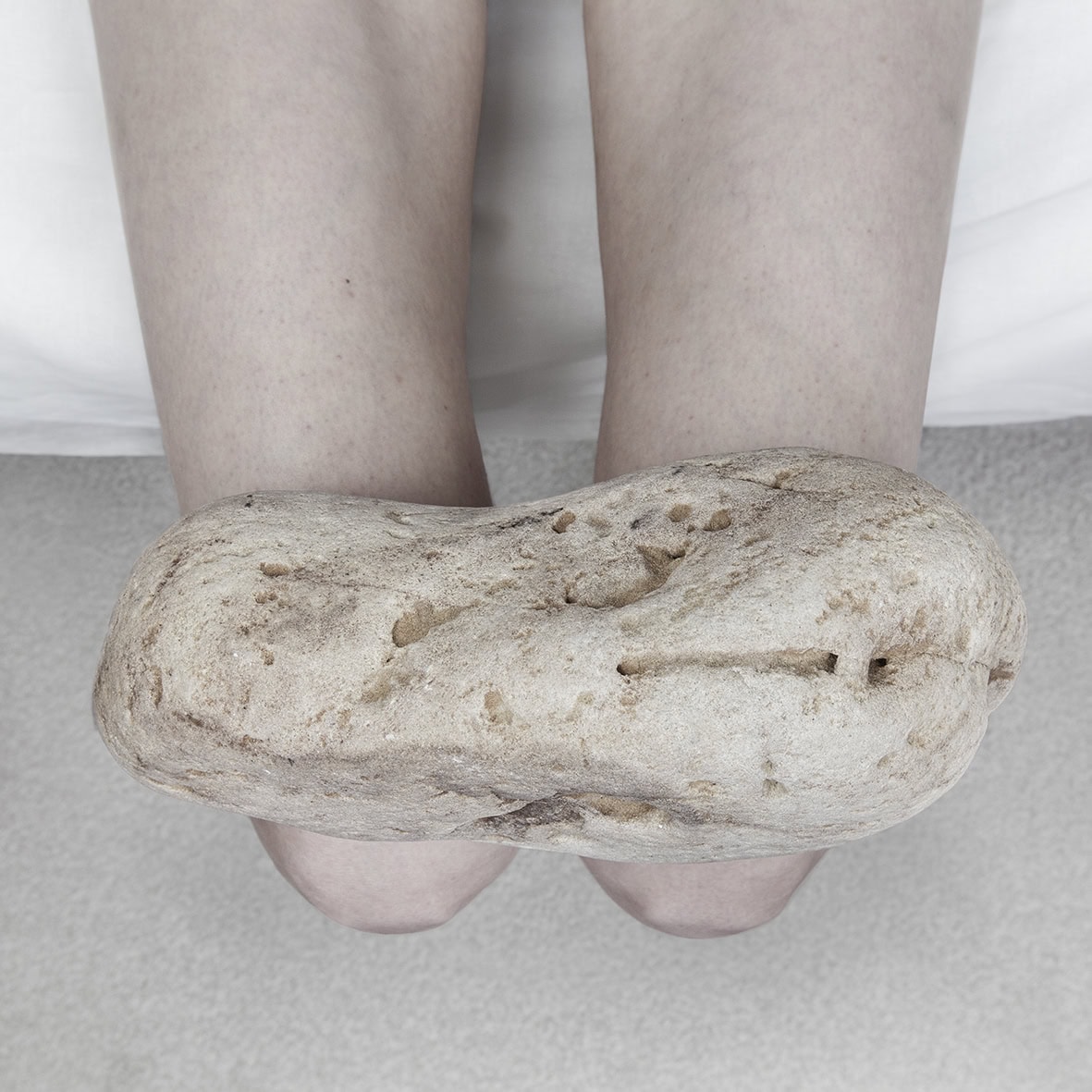
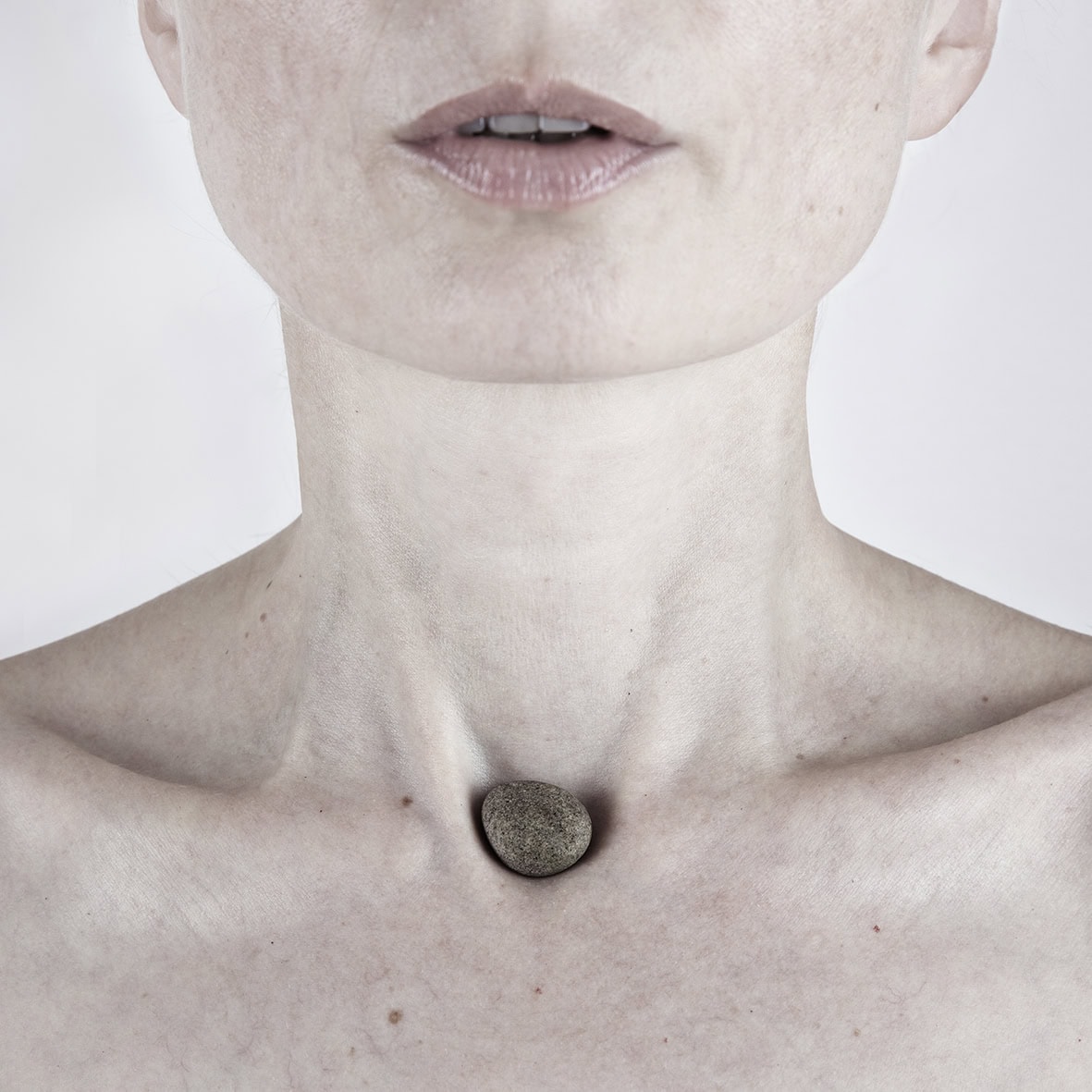
I concluded my rhizomatic project with an intimate studio work entitled Self-Portrait with Stones from the River Tees, which I created using stones collected during my walks along various stretches of the Tees. These water-permeated, porous, smooth, or fragile rock fragments became carriers of geological history and material transmitters of time and memory. By studying their matter in close contact with my own body, upon which I arranged them, drawing a map of mineral deficiencies in my system, I was able, like Gwen John, to look at myself. I did this through a camera lens, mediating the process of looking and being seen. It functioned as a moving mirror, fragmentarily revealing my body in relation to the body of the valley.
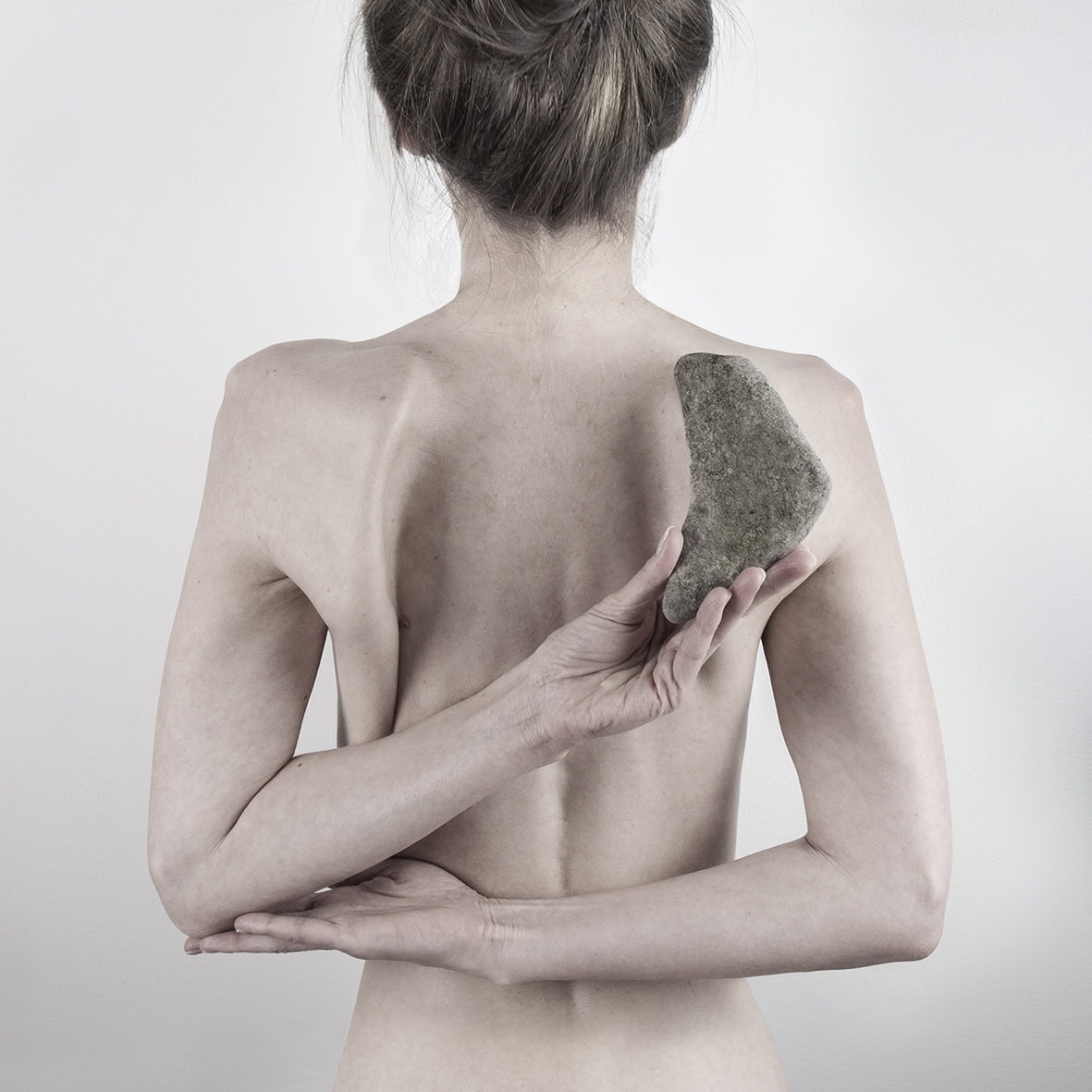
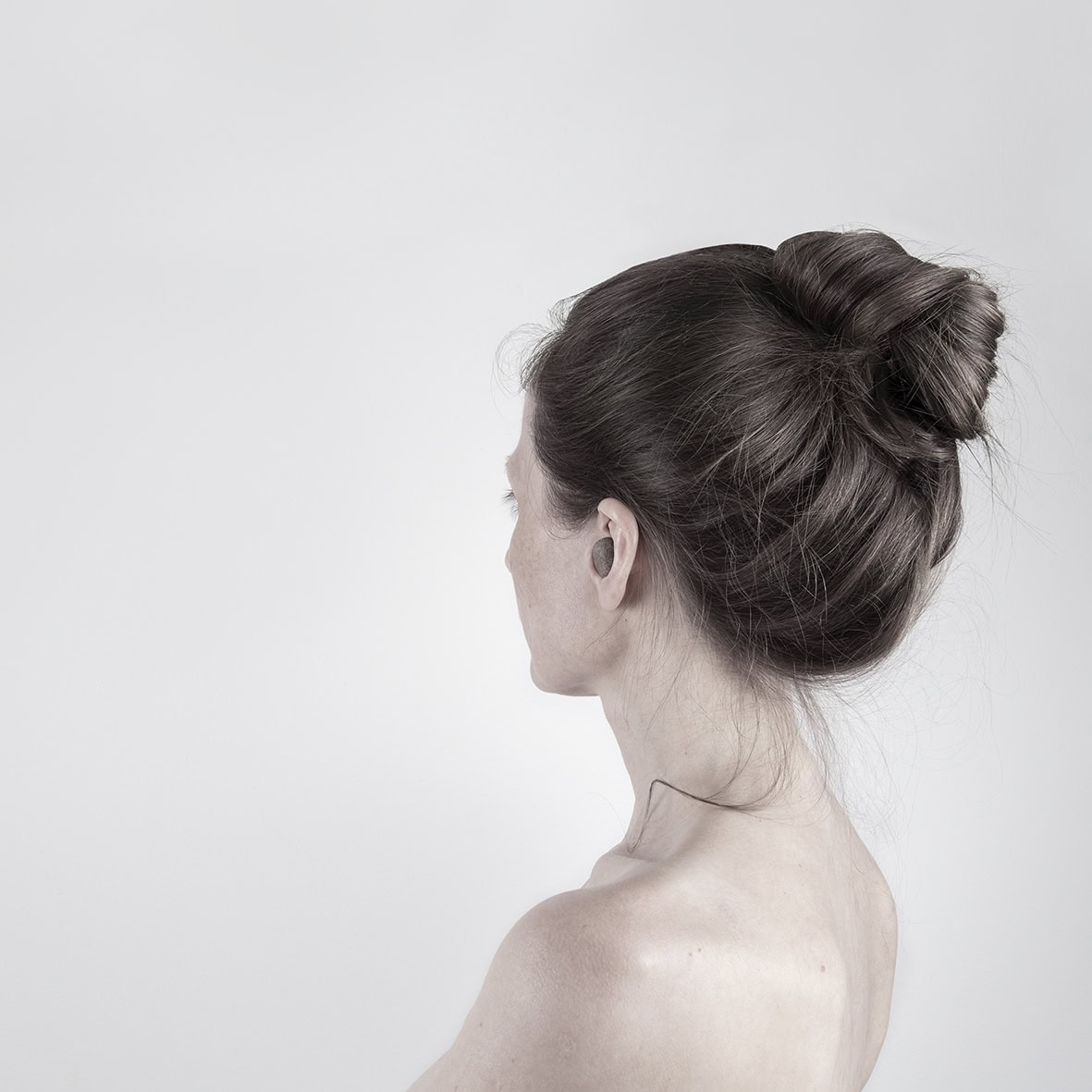
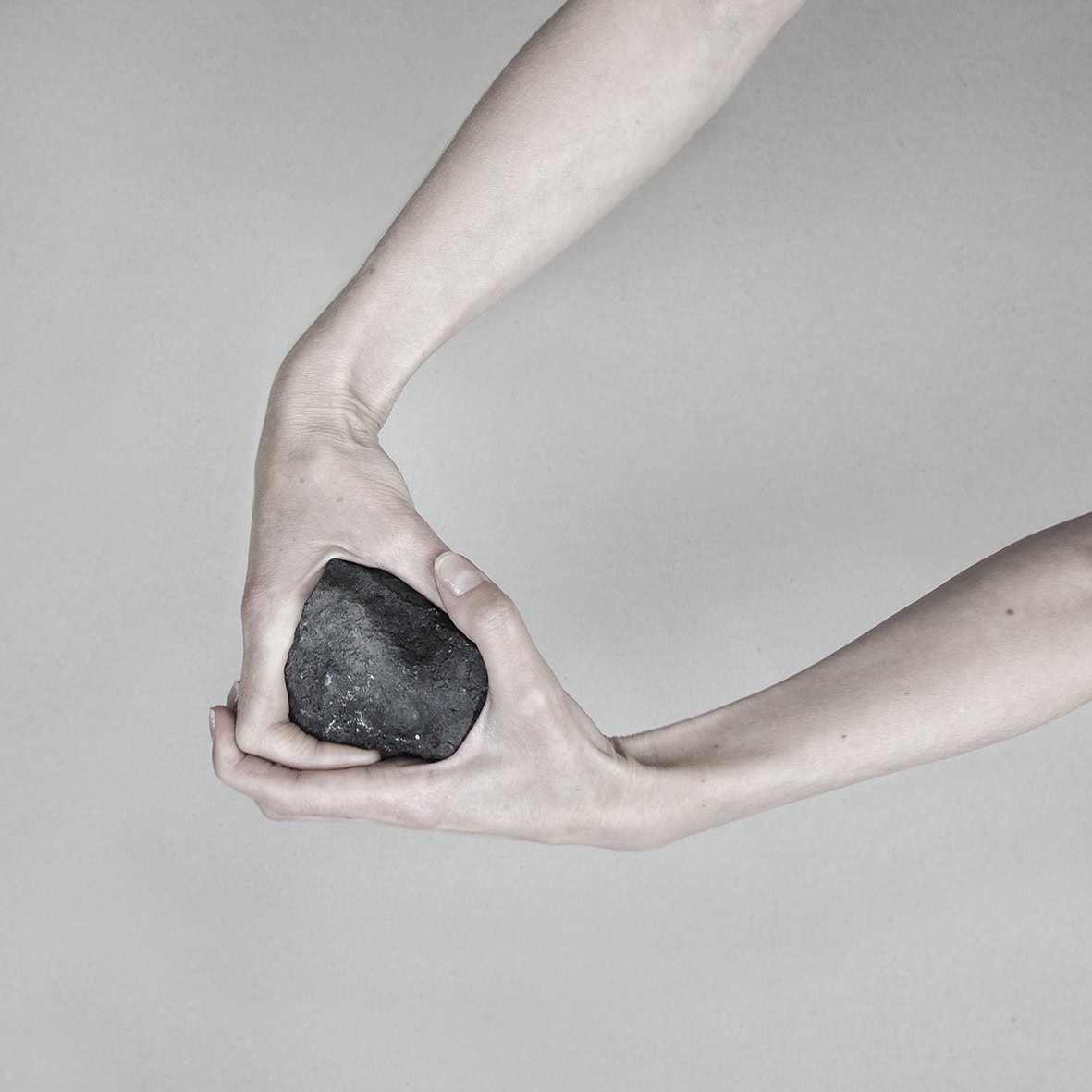
From this perspective, the self-portrait became to me both a record of identity and a practice of presence in place and time. Expanding its concept to a network of biological, geological, and historical connections between the body and the earth allowed me to activate bodily memory in relation to the past. Recording these bounds was for me a significant act of resistance against anthropocentric narratives of self. It was instead a trace of a tender gaze directed inward, reclaiming layers of profound relationships with nature and recognising space for boundaries and dependency between body and surroundings, their visibility, forms, and matter: the earth that shaped me and the body that carries this earth within.
__
Part VIII
Conclusion
I developed The Other Shore as a meditation on place, approaching it through multiple, layered ways of seeing. I navigated Tees Valley on both micro and macro levels: through the camera lens, the eye of a frog and a bird, the narrow gaze of a microscope and the wide frame of cartographic history. I traced the valley’s contours through geological, mythological, artistic, and archival perspectives — reading its surfaces visually and intuitively, sensing its biodiversity and the tensions etched into its terrain. I reconstructed lost landscapes, which emerged slowly, legible only through fragments: through fossilised traces, changes in the river’s shapes and flows, or the silence of native species that no longer live there. Tees waters, once rerouted and shortened to serve human industry, hold echoes of an altered past, but also whispers of future transformations yet to come.
At its core, this work questions what it means to look at the land not just as a backdrop, but as a living body — one marked by loss and dependency. It touches on critical tensions around the human right to reshape, extract from, or interfere with the earth, including for medical or agrotechnical purposes. It wonders what ethical space exists between care and intervention, and how the body — both human and non-human — carries the imprint of such actions. The Other Shore is a self-portrait of entanglement, migration of geological artefacts, and the line between the human body and the ground from which it rises. It is the self-portrait that does not end at the surface of my skin but reaches deeper, into mineral memory and emotional layers. A portrait that does not solely show my image but also asks who I am, from what elements I am made, and whether this other side—the other shore—is also the place I come from or the place to which I continually try to return?