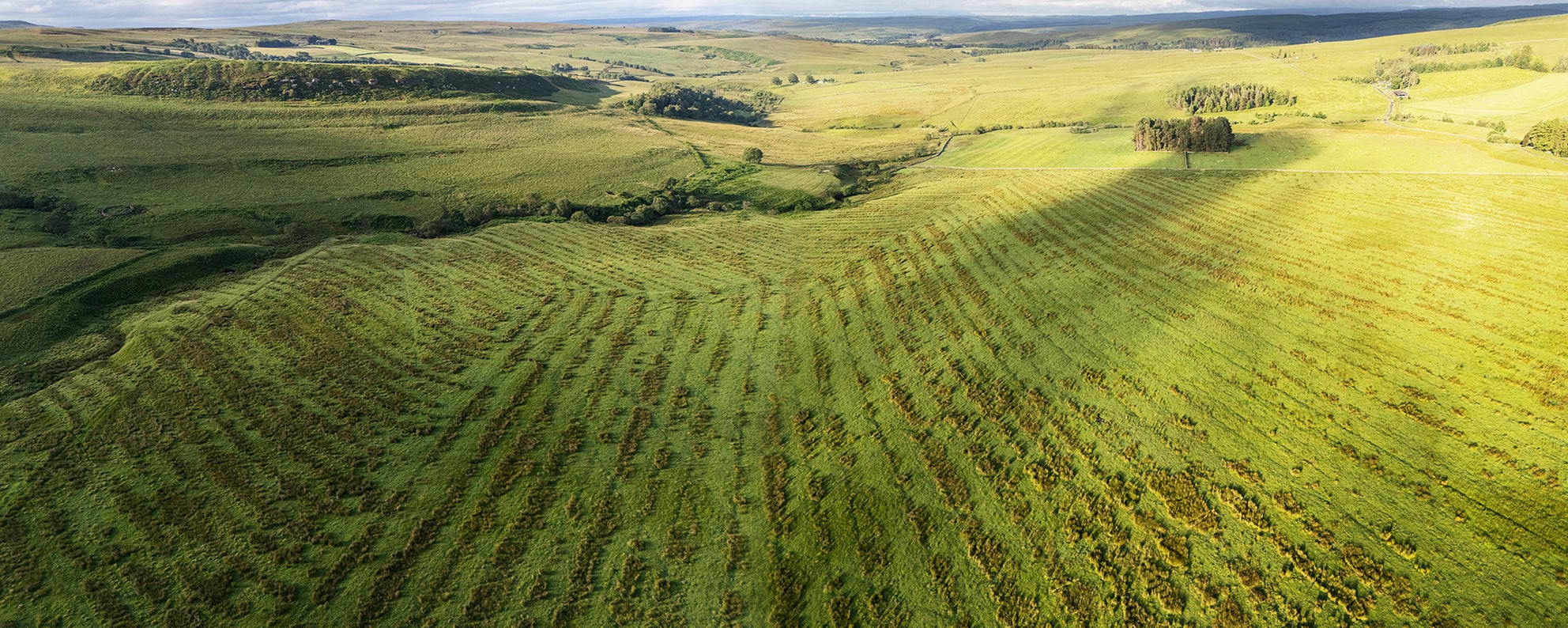
Earth-Body is a photo-performative art project by Małgorzata Dawidek that creatively reflects on the consequences of natural resource exploitation and the potential for the regeneration of devastated ecosystems.
For almost a decade, the Dawidek has been exploring the relationship between the ill human body and the ill body of the Earth, analysing somatic and geological manifestations of healing and developing artistic strategies for soothing wounded landscapes.
The result of her recent work in (post-)mining areas in England (Highgreen Valley) and Poland (Tyśmienica Valley) is a series of photographs that engage in a dialogue between the landscapes of these two regions.
The materials presented on this website were created as part of a scholarship awarded to the artist by the National Reconstruction Plan for Culture, financed by the European Union – NextGenerationEU.
Ziemia-Ciało to fotograficzno-performatywny projekt artystyczny Małgorzaty Dawidek skupiony na twórczej refleksji nad konsekwencjami eksploatacji zasobów naturalnych i potencjałem regeneracji zdewastowanych ekosystemów.
Od niemal dekady artystka bada relacje między chorym ludzkim ciałem a chorym ciałem Ziemi analizując somatyczne i geologiczne przejawy uzdrawiania i wypracowując twórcze strategie kojenia zranionych krajobrazów.
Efektem jej ostatnich prac na (po)kopalnianych terenach Anglii (Dolina Highgreen) Polski (Dolina Tyśmienicy) są serie zdjęć podejmujących dialog krajobrazów w tych dwóch regionach.
Prezentowane na tej stronie materiały powstały w ramach przyznanego artystce stypendium Krajowego Planu Odbudowy dla Kultury finansowanego przez Unię Europejską.

Diagnosis and Reconstructions
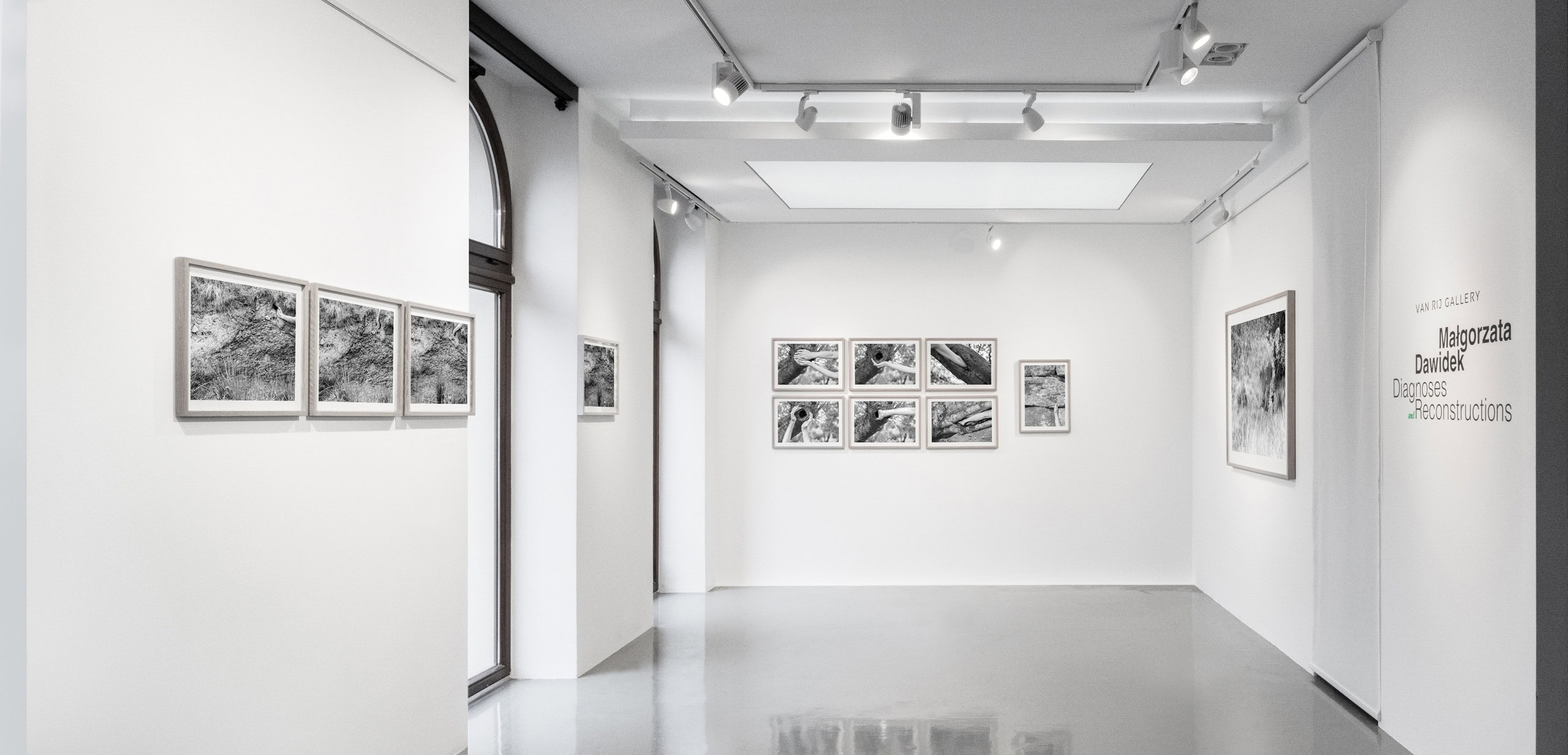
Diagnoses and Reconstructions is a cycle of works created by Małgorzata Dawidek during her artistic residency in northern England (Visual Arts in Rural Communities, Northumberland). Engaging her own body, the artist developed a series of micro-performances based on simple gestures of support and reconstruction of fragments of wounded nature. These ephemeral actions were documented in black-and-white photographs.
The cycle was awarded by the University College London Doctoral School and longlisted for the Aesthetica Magazine Art Prize. At the Van Rij Gallery exhibition in Kraków, around a dozen photographs is displayed, carefully selected from the full collection of 45 images.
The project draws on the history of a site subjected to intensive mining exploitation from the 18th to the 20th century. Although nature is now gradually reclaiming its territory, the landscape still bears traces of past exploitation: mine shafts, exposed geological strata, and damaged vegetation. In this context, Dawidek’s works establish a quiet dialogue with the space, offering a gesture of empathy towards nature and reflecting on the human relationship with the environment.
The exhibition is accompanied by a catalogue featuring essays by Magdalena Ujma and Luiza Nader, as well as an in-depth interview with the artist conducted by Katarzyna Rij.
Graphic design: Anna Pol-Pawrowska.
•
Exhibition organisers:
Van Rij Gallery
Art and Design LT Foundation
•
Media patrons of the exhibition:
TVP Kultura
Bęc Zmiana Foundation
Restart. Kwartalnik ASP
Stowarzyszenie Czas Kultury
•
Project implemented as part of the Poland’s Recovery and Resilience Plan KPO dla Kultury
Diagnozy i Rekonstrukcje to cykl prac Małgorzaty Dawidek, zrealizowanych podczas rezydencji artystycznej w północnej Anglii (Visual Arts in Rural Communities, Highgreen Northumberland). Angażując własne ciało, artystka stworzyła serię mikroperformensów opartych na prostych gestach wspierania i rekonstruowania fragmentów zranionej przyrody. Przebieg tych efemerycznych działań został utrwalony na czarno-białych fotografiach.
Seria została nagrodzona przez University College London Doctoral School i wybrana do nagrody Aesthetica Magazine. Na krakowskiej wystawie w Van Rij Gallery jest zaprezentowanych kilkanaście zdjęć będących staranną reprezentacją cyklu liczącego 45 ujęć.
Punktem wyjścia projektu była historia miejsca, które od XVIII do XX wieku podlegało intensywnej eksploatacji górniczej. Choć obecnie stopniowo odzyskuje je natura, krajobraz wciąż zdradza ślady dawnych zranień: sztolnie, odsłonięte warstwy geologiczne, zniszczoną roślinność.
W tym kontekście prace Dawidek nabierają znaczenia cichego dialogu z przestrzenią, są gestem empatii wobec przyrody i refleksją nad relacją człowieka z otoczeniem.
Wystawie towarzyszy katalog zawierający teksty Magdaleny Ujmy, Luizy Nader oraz pogłębiony wywiad z artystką przeprowadzony przez Katarzynę Rij.
Projekt graficzny: Anna Pol-Pawrowska.
•
Organizatorzy wystawy:
Van Rij Gallery
Art and Design LT Foundation
•
Patroni medialni wystawy:
TVP Kultura
Fundacja Bęc Zmiana
Restart. Kwartalnik ASP
Stowarzyszenie Czas Kultury
•
Projekt realizowany w ramach stypendium
KPO dla Kultury
Discussion Panel Accompanying the Exhibition
by Małgorzata Dawidek
Diagnoses and Reconstructions
at Van Rij Gallery in Kraków
Curator: Magdalena Ujma
Online event
Thursday, 18 December 2025, 6:00 PM
During this panel accompanying Małgorzata Dawidek’s exhibition Diagnoses and Reconstructions, the invited guests examine the landscape as a palimpsest of memory, pain, and renewal. The debate features the artist herself, the exhibition’s curator Magdalena Ujma, and art historian Luiza Nader, who explore creative strategies for healing wounded landscapes, the relationship between the ill human body and the ill body of nature and analyse small gestures of attentiveness that can open up new perspectives on environmental concerns.
Chairing: Magdalena Ujma
Language: Polish
Panel participants:
Małgorzata Dawidek – visual artist and art researcher; graduate of the Academy of Fine Arts in Poznań; holds a PhD in art history (Adam Mickiewicz University) and a PhD in media arts (Slade School of Fine Art, UCL). She works at the intersection of visual arts, literature, anthropology, geology, philosophy, and medical humanities. She develops original concepts of bodygraphy and affective artistic practice, researching the relationships between body, memory, and environment. Her work has been presented in over 100 exhibitions in Europe, Asia, and the USA, and has been awarded, among others, by the Pollock-Krasner Foundation, Hastings Museum & Art Gallery, and the Goethe-Institut.
Magdalena Ujma – art critic, art historian, and curator of contemporary art exhibitions. She ran Gallery NN in Lublin, worked for the editorial team of the literary quarterly Kresy, and was affiliated with the Museum of Art in Łódź and the Bunkier Sztuki Gallery of Contemporary Art in Kraków. Since 2018, Ujma has been associated with the Tadeusz Kantor Art Documentation Centre Cricoteka in Krakow, where she oversees the collection. From 2020 to 2023, she served as President of the Polish Section of the International Association of Art Critics (AICA). She is the author of numerous essays and books on contemporary art and criticism, including Visual Arts. Art and Scandal (2011) and On Criticism (2024). She is currently Editor-in-Chief of Restart magazine at the Academy of Fine Arts in Kraków.
Luiza Nader – art historian and critic, PhD habilitated, Professor at the Academy of Fine Arts in Warsaw, Faculty of Artistic Research and Curatorial Studies. Her research focuses on modern, avant-garde, and neo-avant-garde art, and on the relationship between boundary events and the cultural field. She draws inspiration from theories of affect, trauma, memory, and the archive, as well as concepts related to the “material turn” and affirmative humanities and ethics. She is the author of numerous texts and books on contemporary art, including Conceptualism in the Polish People’s Republic (2009) and Strzemiński’s Affect: “Theory of Vision,” War Drawings, In Memory of Friends – Jews (2018).
Panel dyskusyjny towarzyszący wystawie
Małgorzaty Dawidek
Diagnozy i Rekonstrukcje
w Van Rij Gallery w Krakowie
Kuratorka: Magdalena Ujma
Wydarzenie online
Czwartek, 18 grudnia 2025, godzina 18.00.
Podczas debaty online towarzyszącej wystawie „Diagnozy i Rekonstrukcje” Małgorzaty Dawidek, zaproszone gościnie analizują krajobraz jako palimpsest pamięci, bólu i odnowy. W rozmowie biorą udział artystka, kuratorka wystawy Magdalena Ujma oraz historyczka sztuki Luiza Nader, prowadząc dialog na temat twórczych strategii kojenia zranionych krajobrazów i relacji między chorym ciałem człowieka i chorym ciałem przyrody i przyglądają się jak drobne gesty uważności mogą otwierać nowe perspektywy ekologicznej troski.
Prowadzenie: Magdalena Ujma
Język: polski
Uczestniczki panelu:
Małgorzata Dawidek – artystka wizualna i badaczka sztuki, absolwentka ASP w Poznaniu, doktora historii sztuki (UAM) i sztuki mediów (Slade School of Fine Art, UCL). Pracuje na pograniczu sztuk wizualnych, literatury, antropologii, geologii, filozofii i medycyny humanistycznej. Rozwija autorskie koncepcje bodygrafii i afektywnej praktyki artystycznej, badając relacje między ciałem, pamięcią i środowiskiem. Jej realizacje były prezentowane na ponad 100 wystawach w Europie, Azji i USA, a twórczość nagrodzona m.in. przez Pollock-Krasner Foundation, Hastings Museum & Art Gallery i Goethe-Institut.
Magdalena Ujma – krytyczka i historyczka sztuki oraz kuratorka wystaw sztuki współczesnej. Prowadziła Galerię NN w Lublinie, pracowała w redakcji kwartalnika literackiego „Kresy” a także w Muzeum Sztuki w Łodzi i w Galerii Sztuki Współczesnej Bunkier Sztuki w Krakowie. Od 2018 roku jest związana z Ośrodkiem Dokumentacji Sztuki Tadeusza Kantora Cricoteka, gdzie opiekuje się kolekcją. W latach 2020-2023 była prezeską Sekcji Polskiej Międzynarodowego Stowarzyszenia Krytyki Sztuki AICA. Jest autorką wielu esejów oraz książek z zakresu sztuki i krytyki współczesnej, m.in.: „Sztuki wizualne. Sztuka i skandal” (2011), „O krytyce” (2024). Obecnie jest redaktorką naczelną magazynu „Restart” na Akademii Sztuk Pięknych w Krakowie.
Luiza Nader – historyczka i krytyczki sztuki, dr hab., profesora Akademii Sztuk Pięknych w Warszawie na Wydziale Badań Artystycznych i Studiów Kuratorskich. Jej badania koncentrują się na sztuce nowoczesnej, awangardowej i neoawangardowej, związkach wydarzeń granicznych z polem kulturowym. Inspiruje się teoriami afektu, traumy, pamięci, archiwum, koncepcjami związanymi ze „zwrotem materialnym” oraz humanistyką i etyką afirmatywną. Autorka licznych tekstów i książek o sztuce współczesnej, m.in. „Konceptualizm w PRL” (2009) i „Afekt Strzemińskiego ‘Teoria widzenia’, rysunki wojenne, Pamięci przyjaciół – Żydów” (2018).