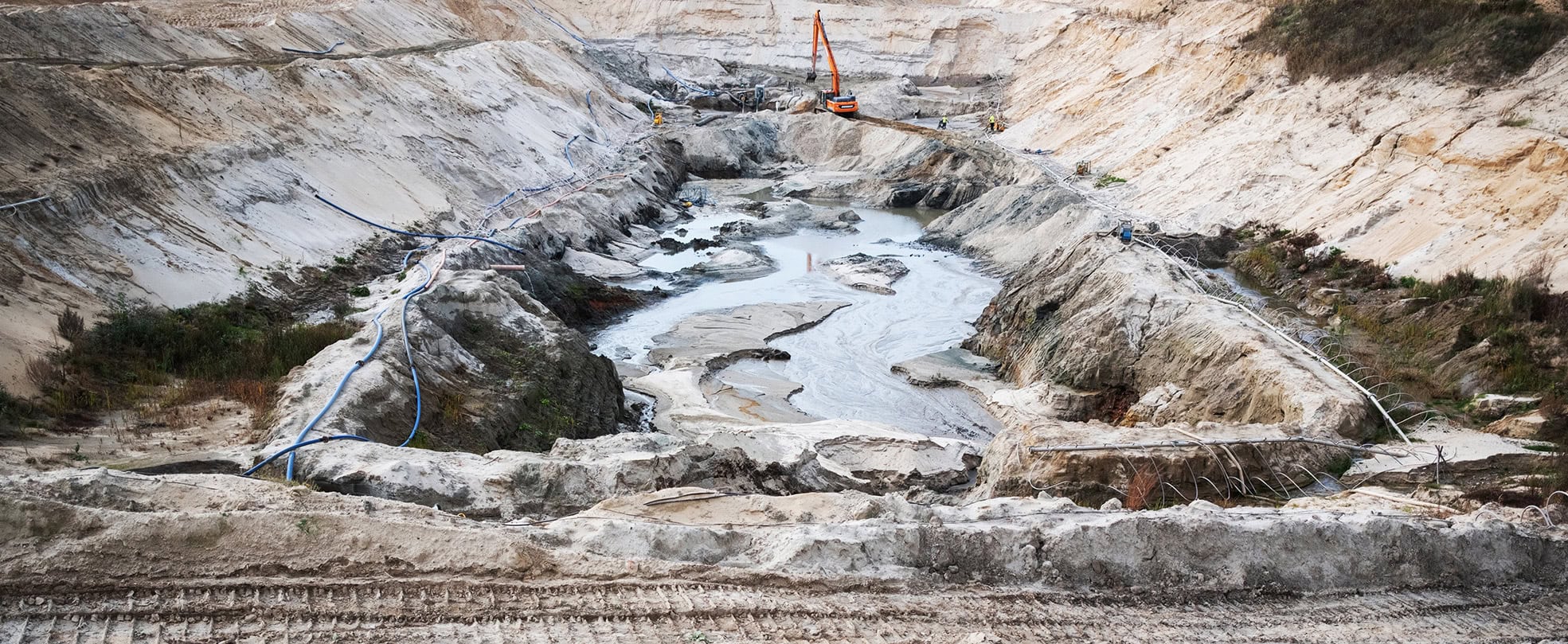
Małgorzata Dawidek, Excavation no 2, Sand, Glauconite and Amber Mine in Niedźwiada, October 2025. Initial research to the R&D project.
At the heart of my research are the relationships between the ill human body and the ailing body of the Earth. For nearly a decade, I have been examining somatic and geological manifestations of healing processes that respond to bodily crises, while simultaneously developing original artistic strategies aimed at soothing wounded landscapes.
This investigation has resulted in artistic research projects carried out in mining and post-mining areas in England (Tees Valley; Highgreen Valley) and in Poland (Tyśmienica Valley). The works were developed between 2018 and 2025 through rigorous artistic research and experimentation combining visual and performative practices with archival, geological, and historical studies, as well as collaboration with experts from various fields.
These projects were developed around a set of critical ethical questions: What are the consequences of natural resource exploitation? What is the regenerative potential of degraded ecosystems? And what role can artists and artistic practice play within these processes?
The works presented on this page explore the relationship between the condition of the landscape and the condition of the human body in the context of the climate crisis.
They were developed through photography, which at different stages of the process functioned as a witness to performative actions, a research notebook, and a key tool for documenting the geological processes I conducted.
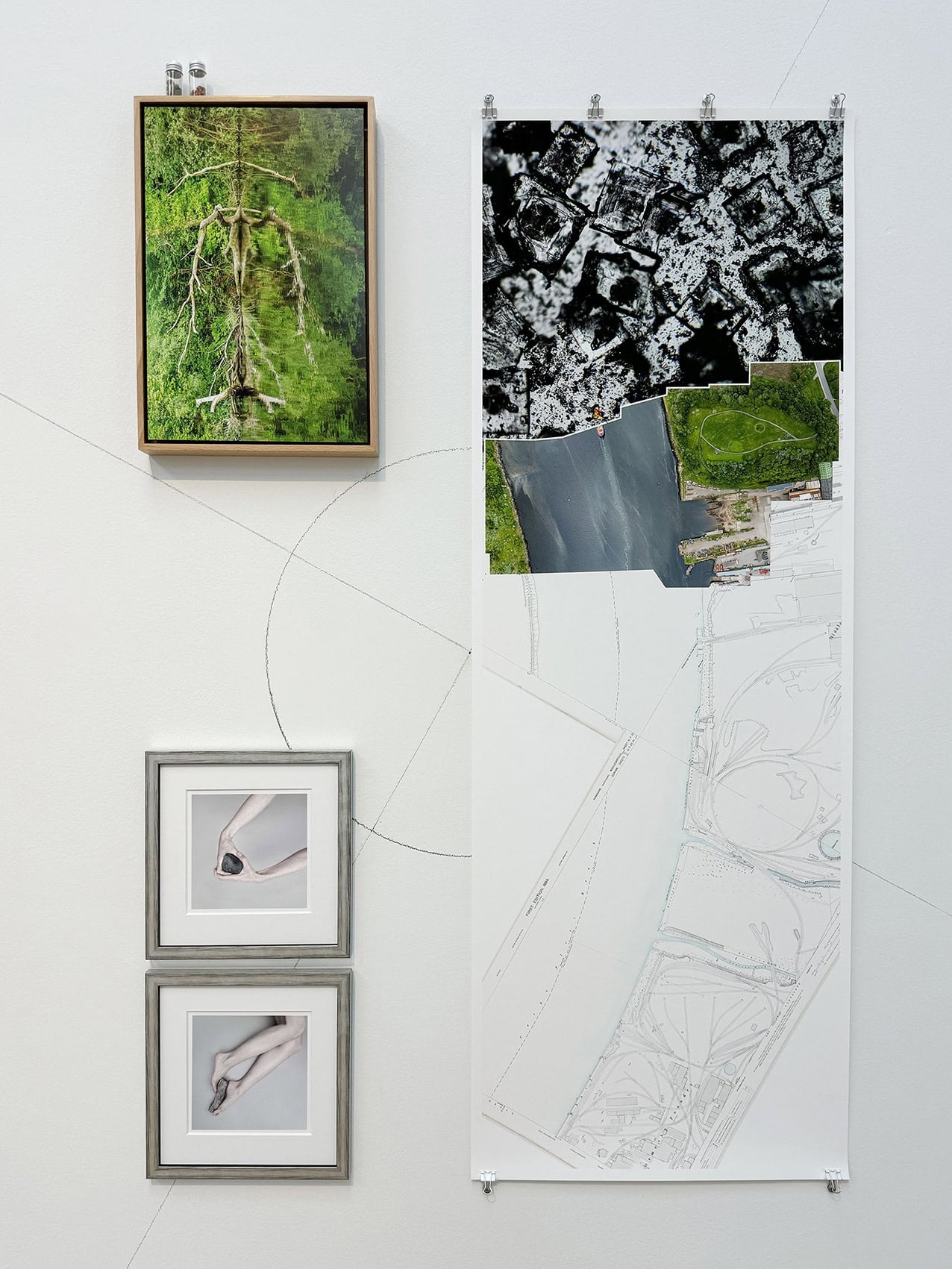
The Other Shore
2024
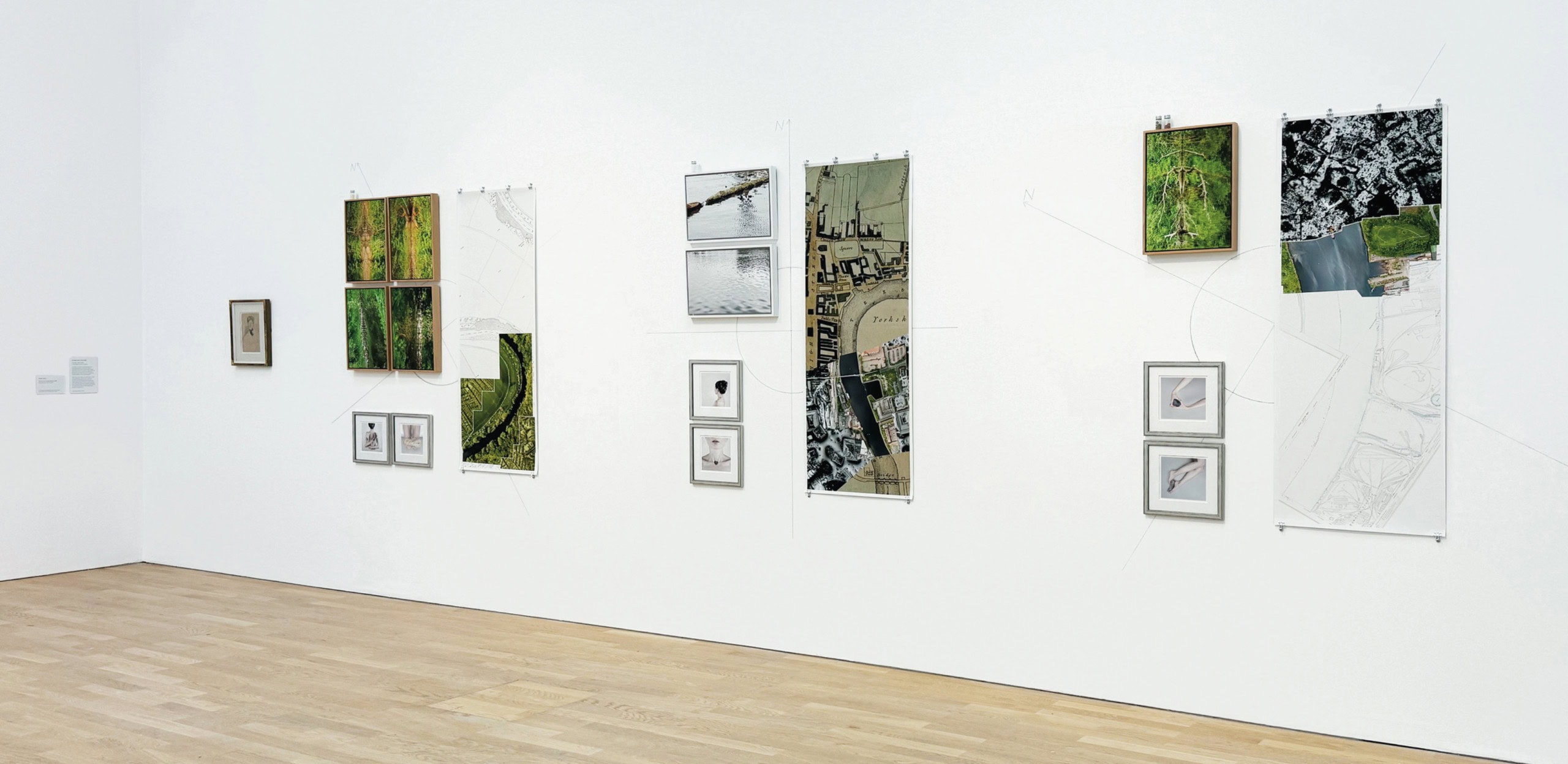
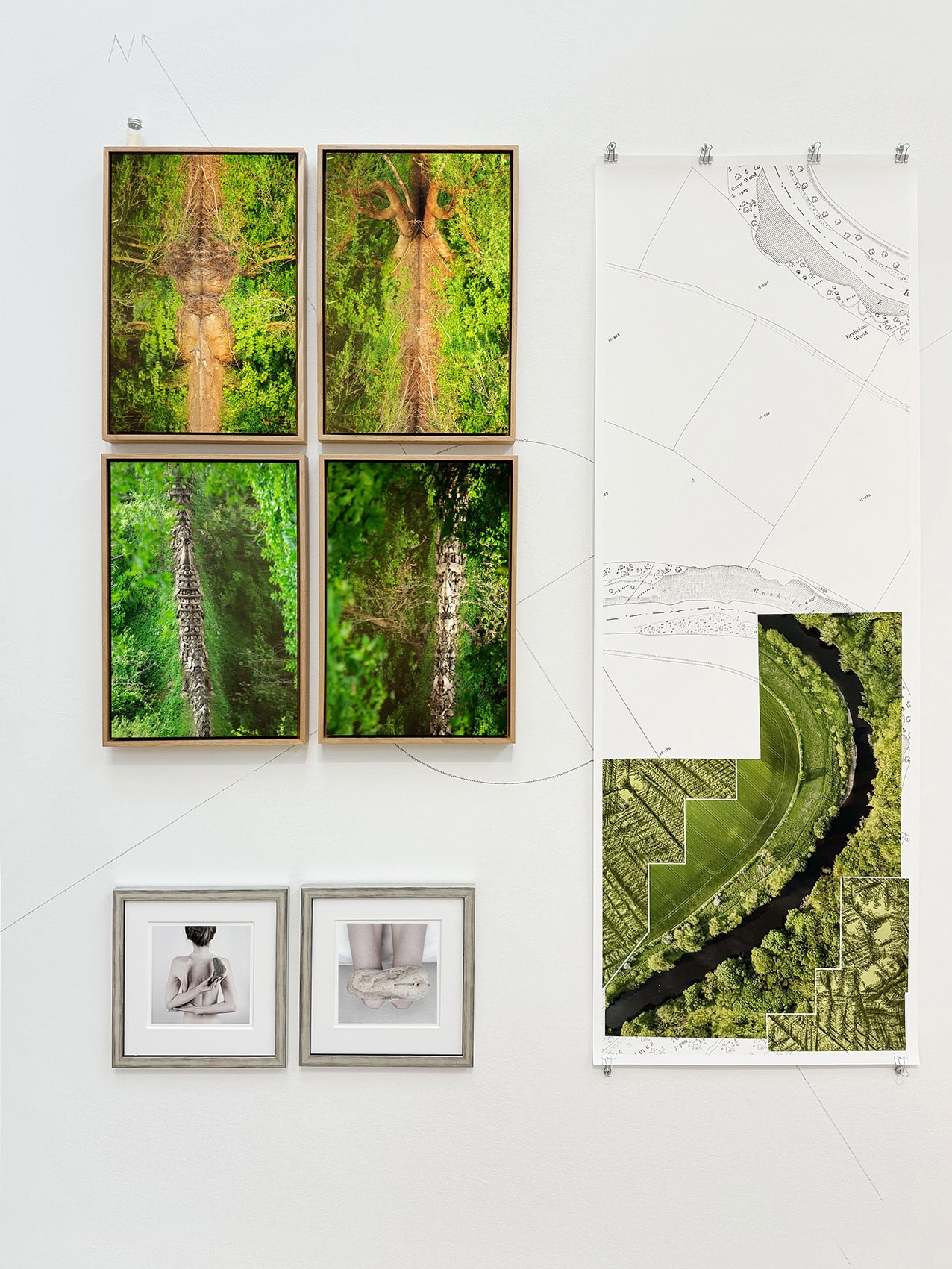
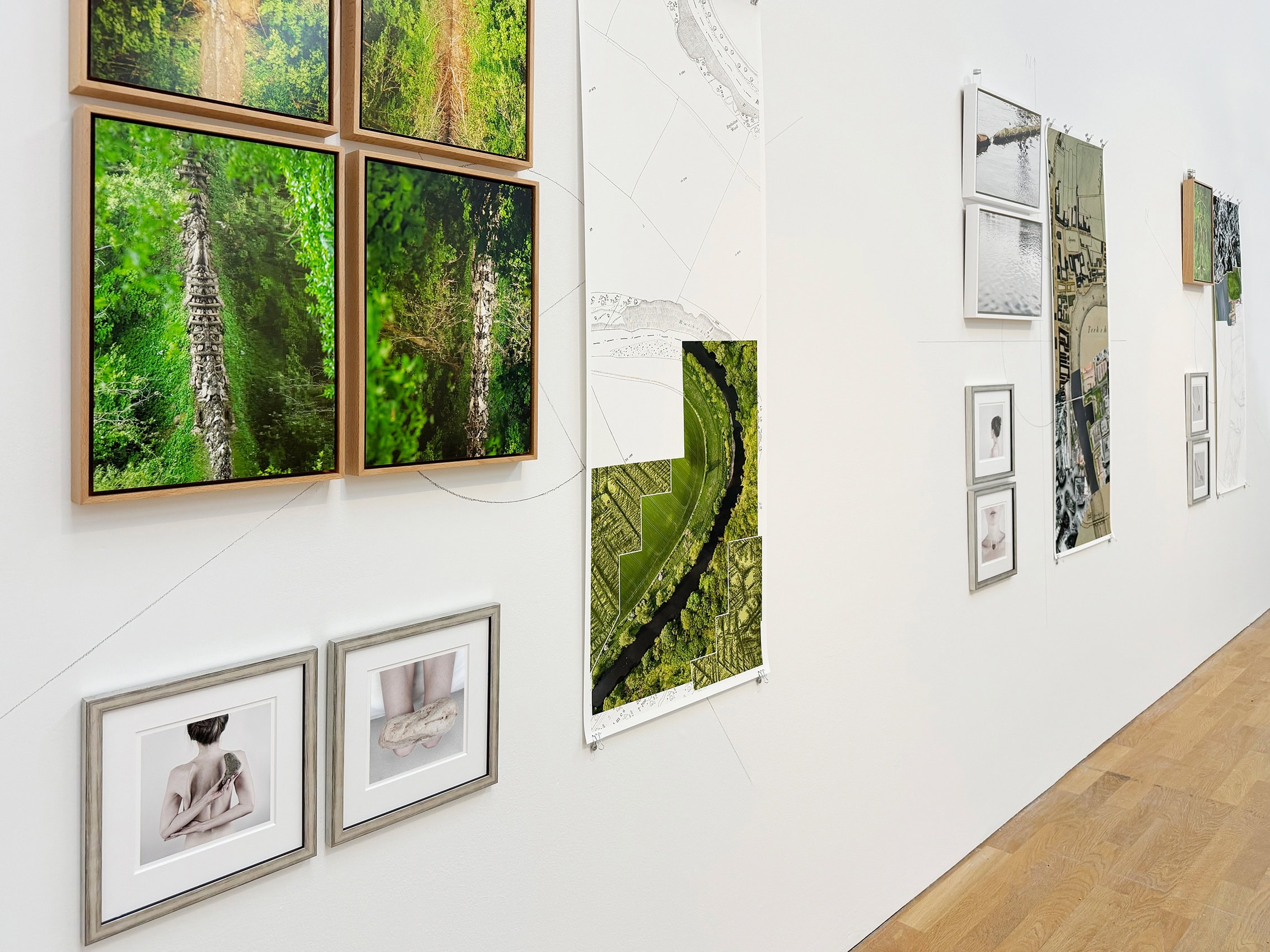
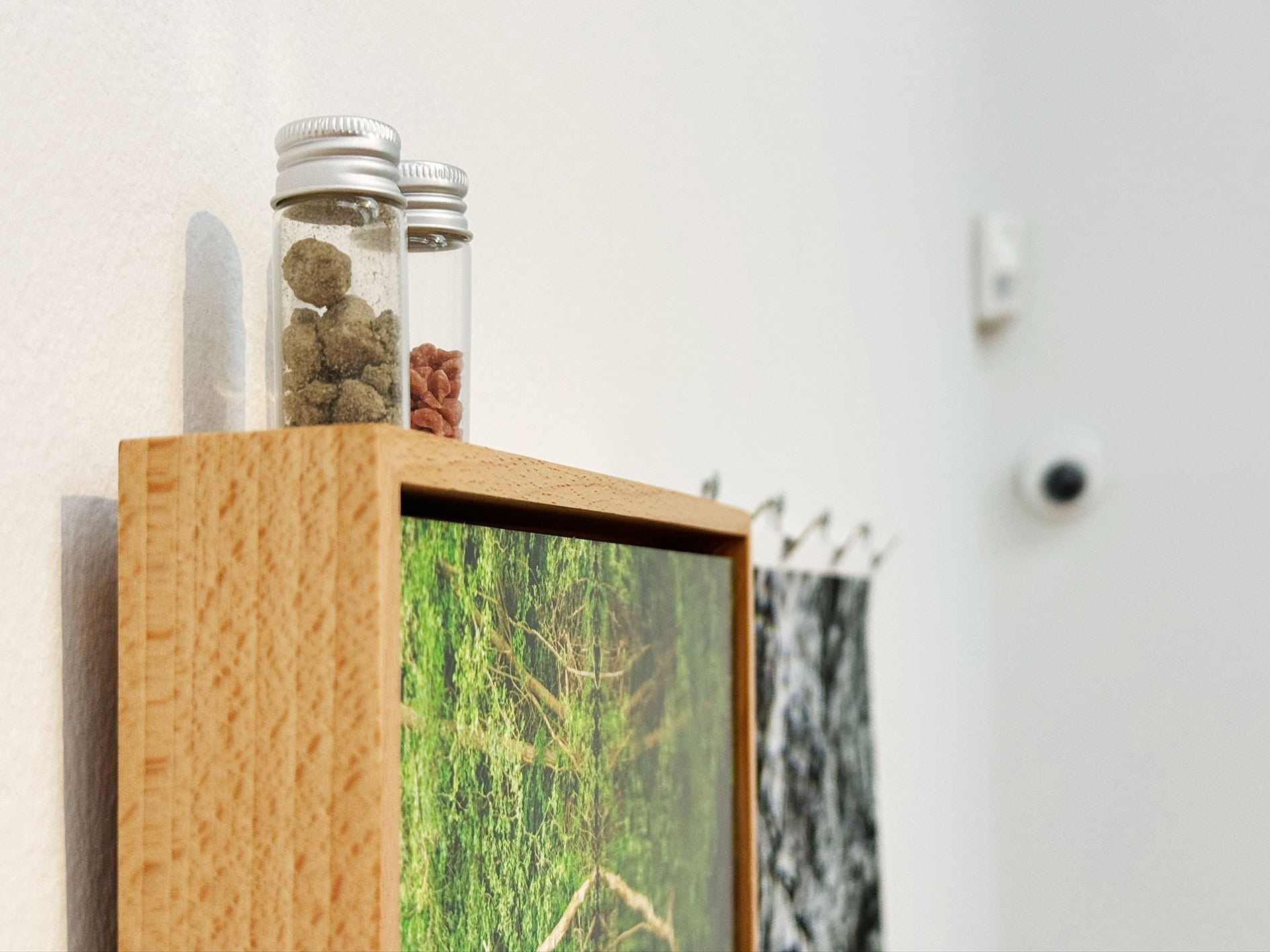
Małgorzata Dawidek, The Other Shore, project presentation at the exhibition Towards New Worlds, Middlesbrough Institute of Modern Art, curated by Helen Welford and Aidan Moesby, Middlesbrough, 2024-2025.
Research project commissioned by
Middlesbrough Institute of Modern Art.
The project producers and coordinators:
Helen Welford and Danni Ash.
Technique: Full colour series of photographs.
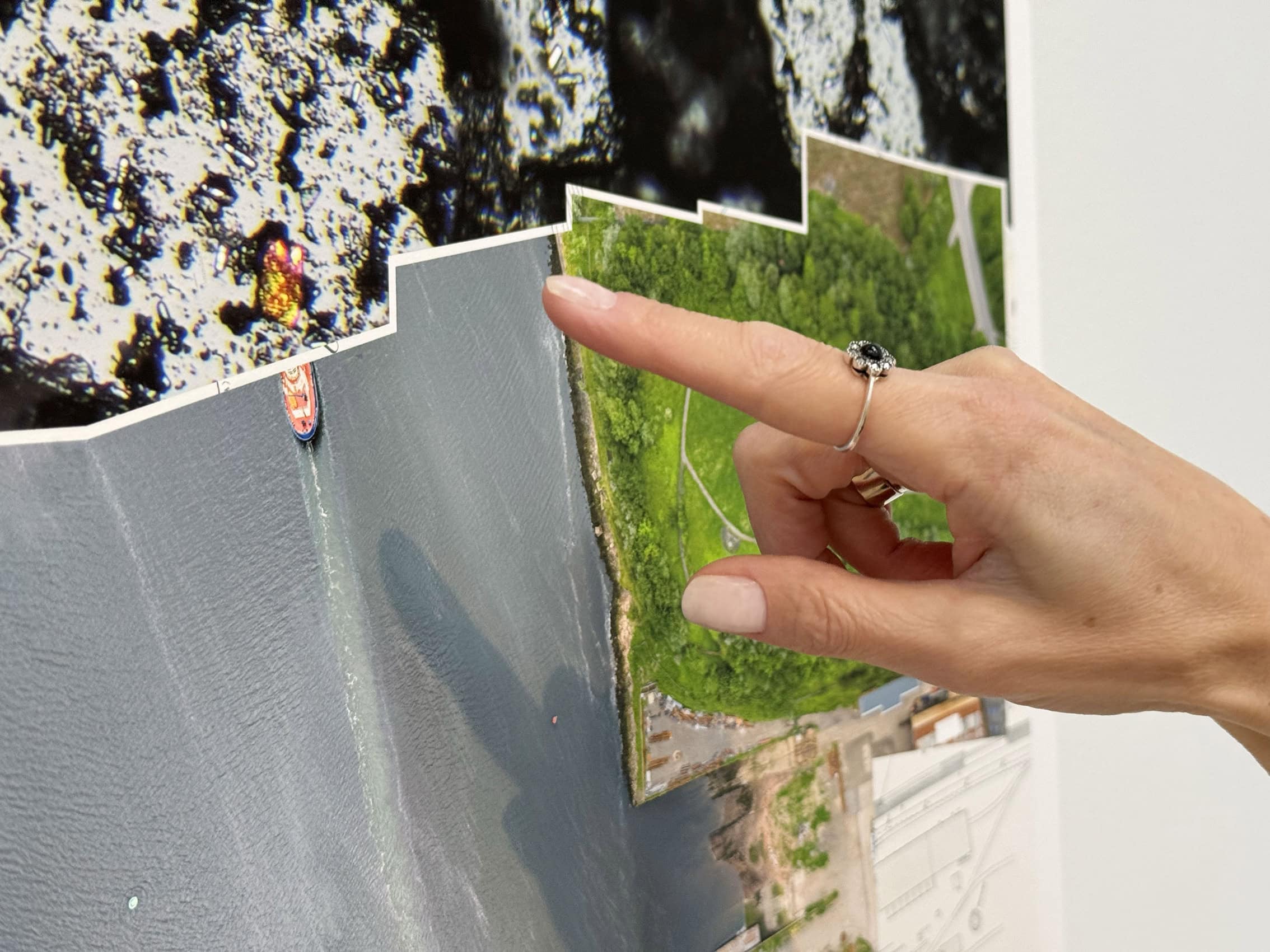
Spatial and microscopic photography.
Studio photography. Drawing.
Media: Digital print | Fine Art Hahnemühle Photo Rag
matte archival paper, 310g.
Various formats.
Pencil drawing on wall.
Triptych.
_______________________
The Other Shore is a one-year-long research project, which explores the geohistorical contexts of the Tysmienica Valley in eastern Poland, where I am originally from, and the Tees Valley, in north-east England, where I was on a study stay. At the heart of these valleys lie the Tysmienica and Tees rivers. My childhood in the Tysmienica Valley has given me a unique perspective for this work. 250 million years ago, these two regions were located on opposite sides of the Zechstein Sea, which covered a large part of today’s European continent. As a result of climate change and lack of water circulation, the sea dried up through evaporation. Its remnants, such as salts, can still be found in the earth’s natural resources in both regions. These minerals are also used to produce medicinal potassium, magnesium and iron, of which I have critical deficits in my body, so they are a crucial part of my therapy.
__
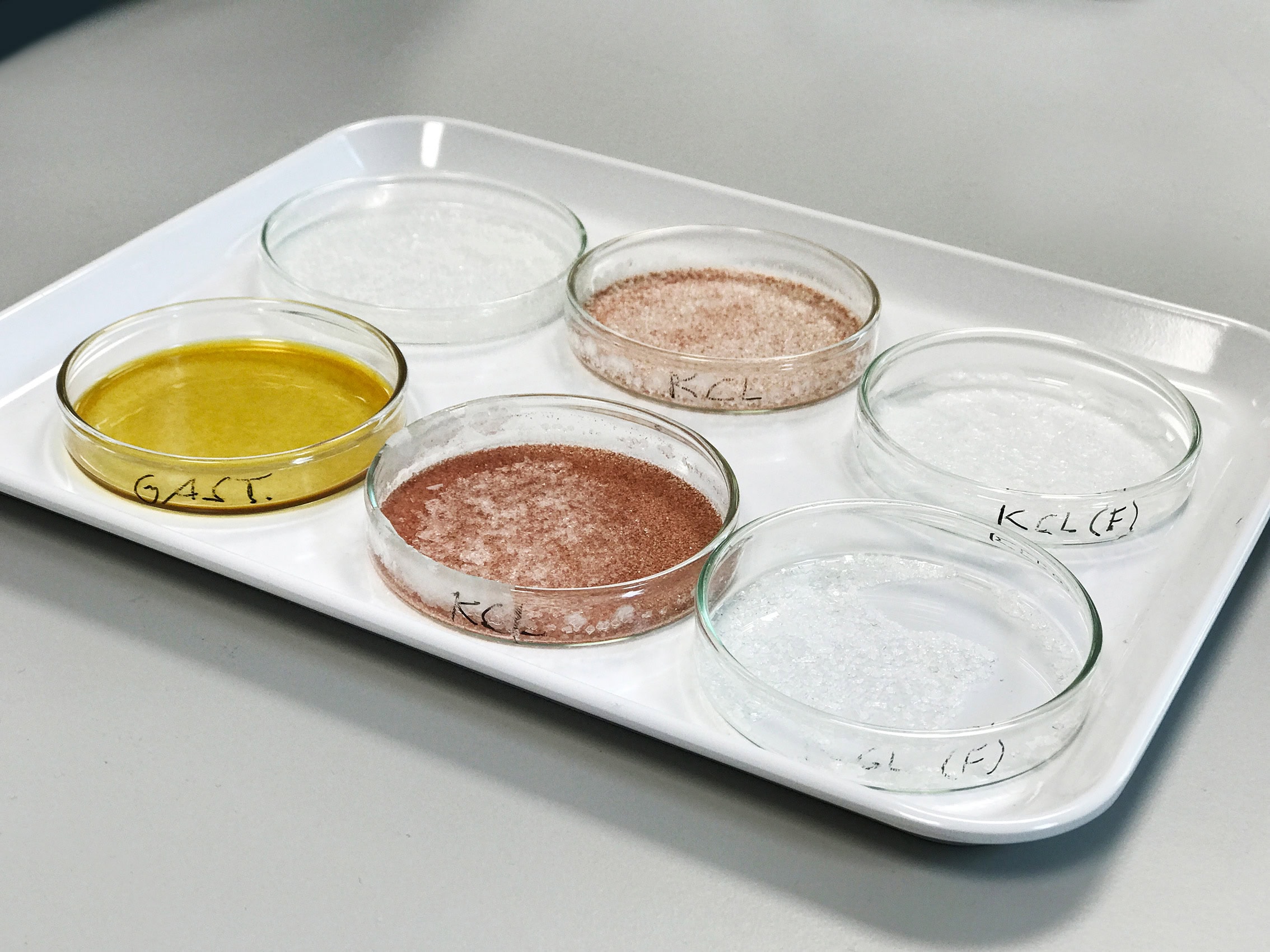
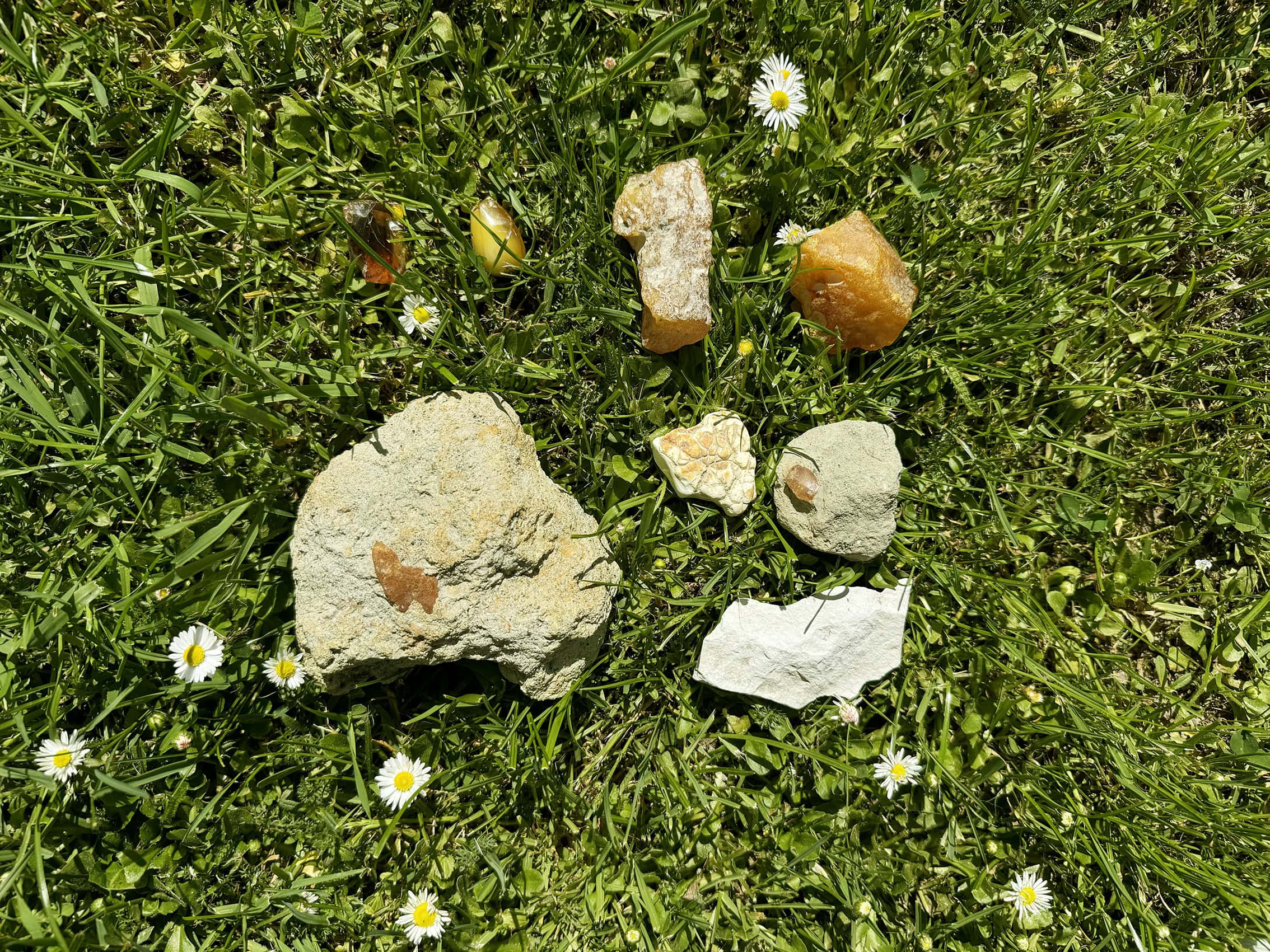
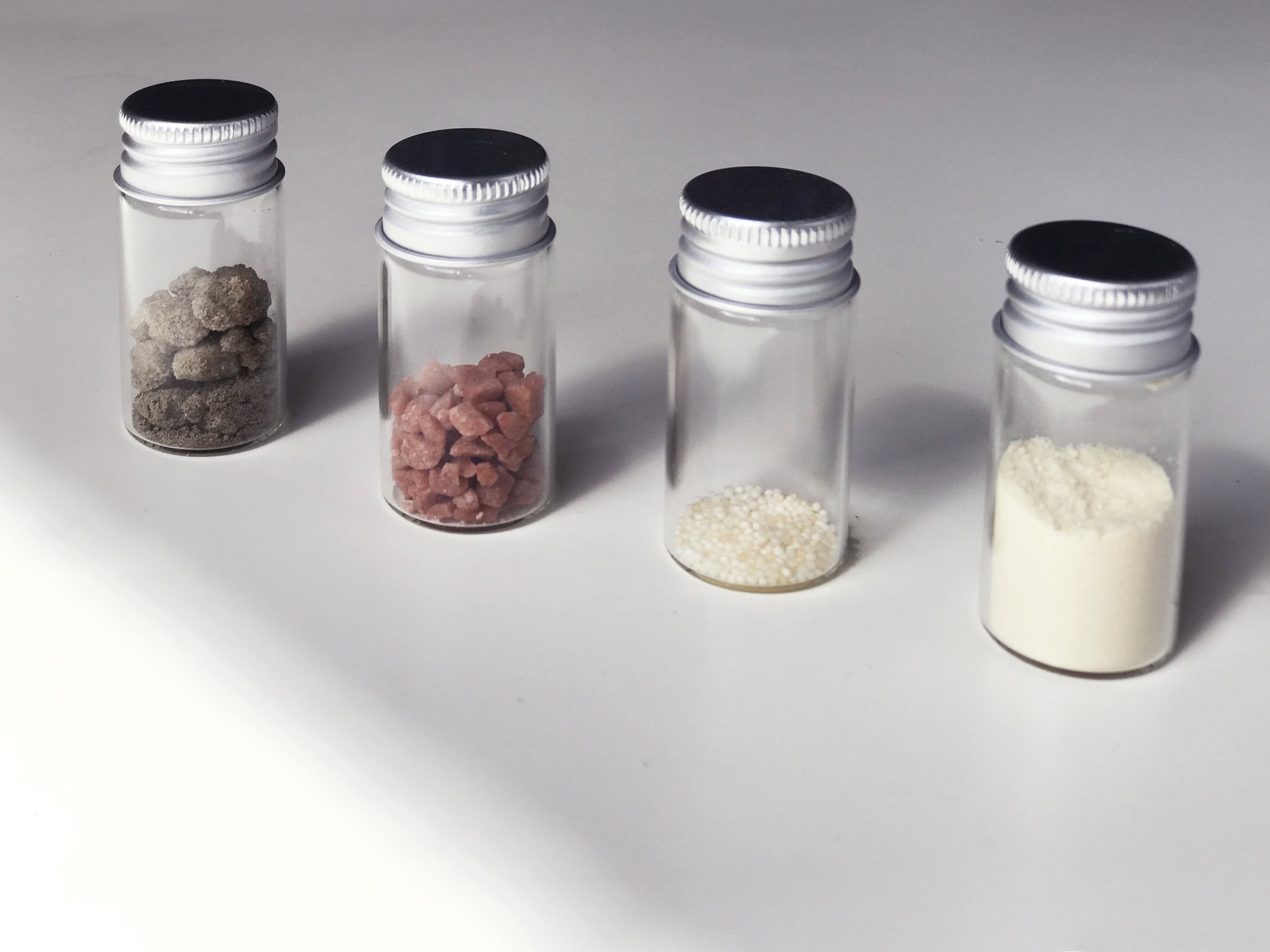
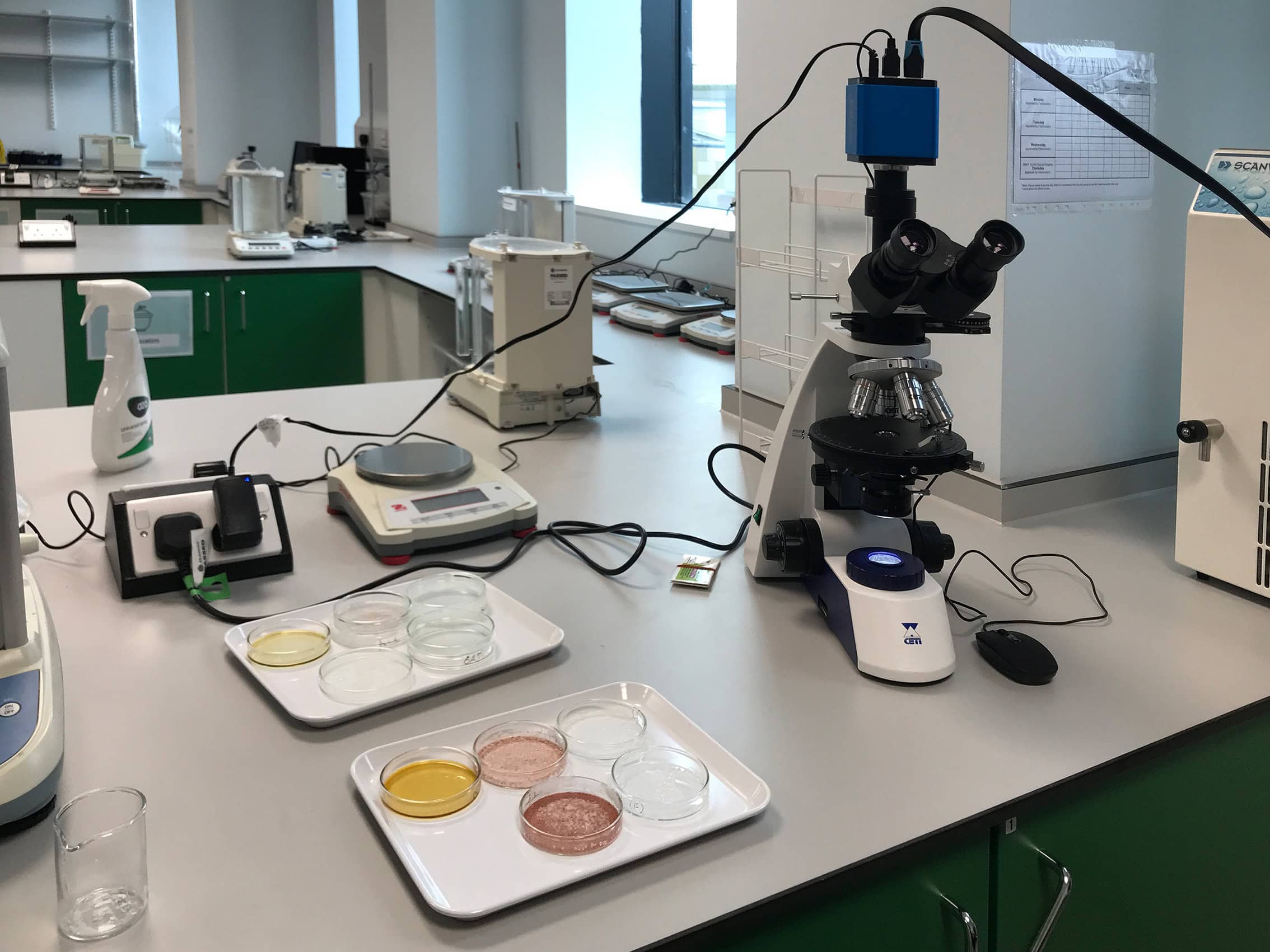
My work has a reconstructive character. It has involved examining material collected from local mines and reconstructing past landscapes and structures, thanks to the expertise and generosity of researchers and technicians – Henryk Ciosmak of the Sand, Glauconite and Amber Mine at Niedzwiada and Sue Armstrong of the Underground Laboratory at Boulby Mine. I also worked with geologist Dr Jens Holtvoeth of Teesside University School of Health & Life Sciences, Geology Department, taking microscopic images of collected minerals under polarised light.
I have spent many days walking along the River Tysmienica near Semień in Poland and River Tees in areas including Dalton-on-Tees, Croft-on-Tees, Darlington, Yarm, Stockton-on-Tees and Middlesbrough, examining changes in the shape of their banks and the structure of found artefacts from microscopic and aerial perspectives, as well as through geological, archival, historical, mythological and artistic lenses. I have also been tracing the history of the melioration of the Tees meanders using historical maps and in collaboration with Chris Corbett from the Dorman Museum.
The project was created in relation to Gwen John’s self-portrait, which I found in the collection of the Middlesbrough Institute of Modern Art. Extending the concept of personal portraiture, I combined photographs of nature and its material artefacts with a studio session in which I worked in an intimate way with objects found in the river by placing them on diseased parts of my body.
__
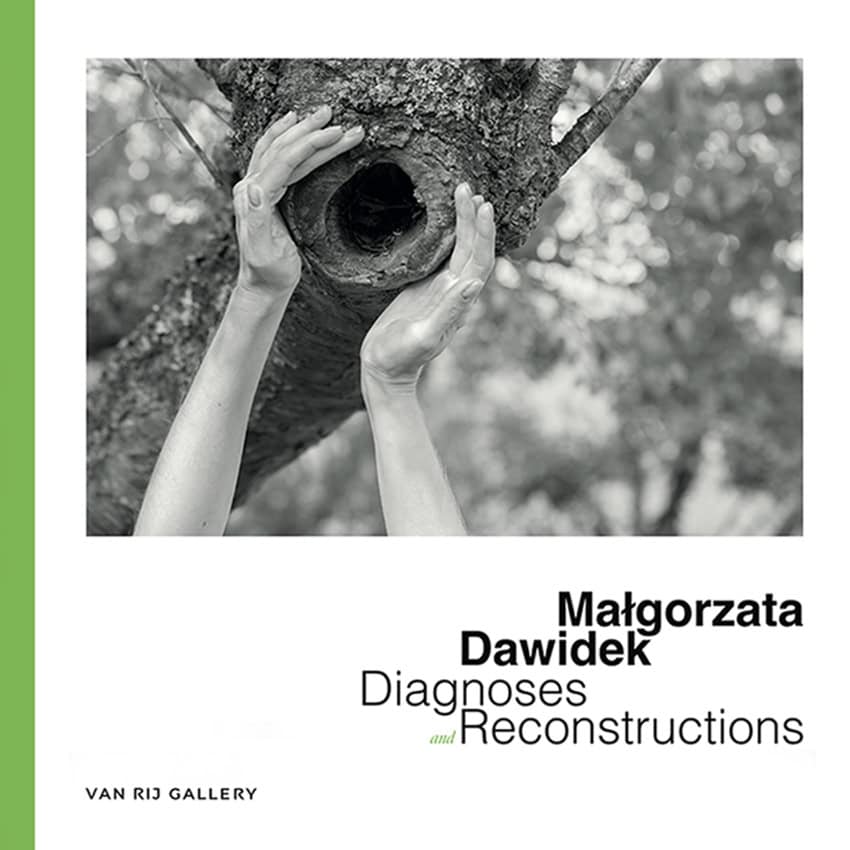
Diagnoses and Reconstructions
2018 – 2025
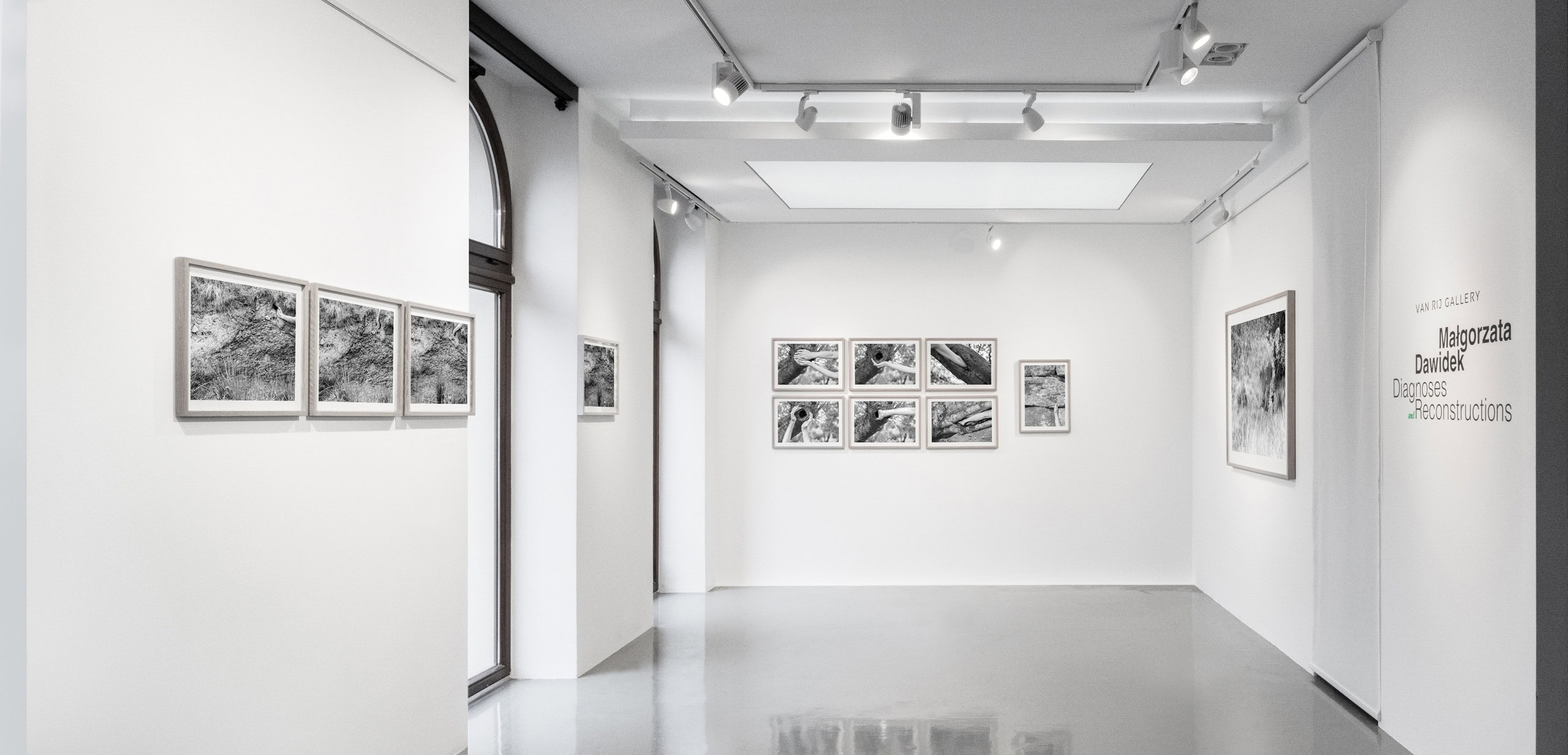
Małgorzata Dawidek, Diagnosis and Reconstructions, van Rij Gallery, Kraków 2025.
Medium: Black and white photographs
Techniques: Digital Print
Matt Archival Fine Art
Hahnemühle Photo Rag print paper, 300g.
Size: Variable formats | Unframed
Self-portraits
Series of 45 photographs
Limited edition of 5 copies
Selected pictures
_______________________
Diagnoses and Reconstructions is a several year long research and development project grounded in artistic practice, performative actions, and historical and geological investigation. It draws on the history of a site subjected to intensive mining exploitation from the 18th to the 20th century – Highgreen Valley.
The project was initiated during my artistic residency at VARC – Visual Arts in Rural Communities in northern England (Northumberland) in 2018. Working for 30 days in isolation across the fields and moorlands of Highgreen Valley, I encountered post-mining traces embedded within landscapes otherwise perceived as pristine and harmonious.
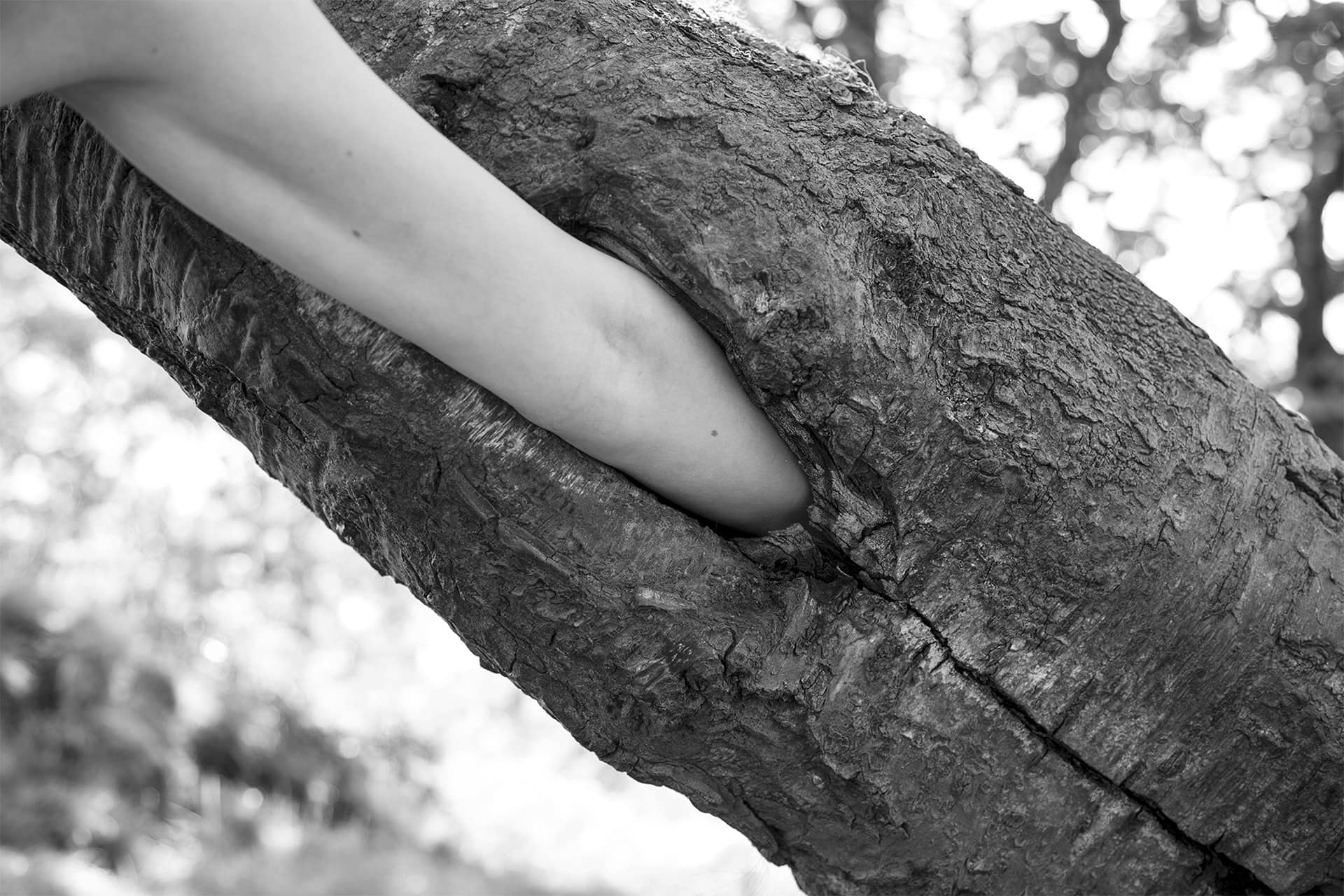
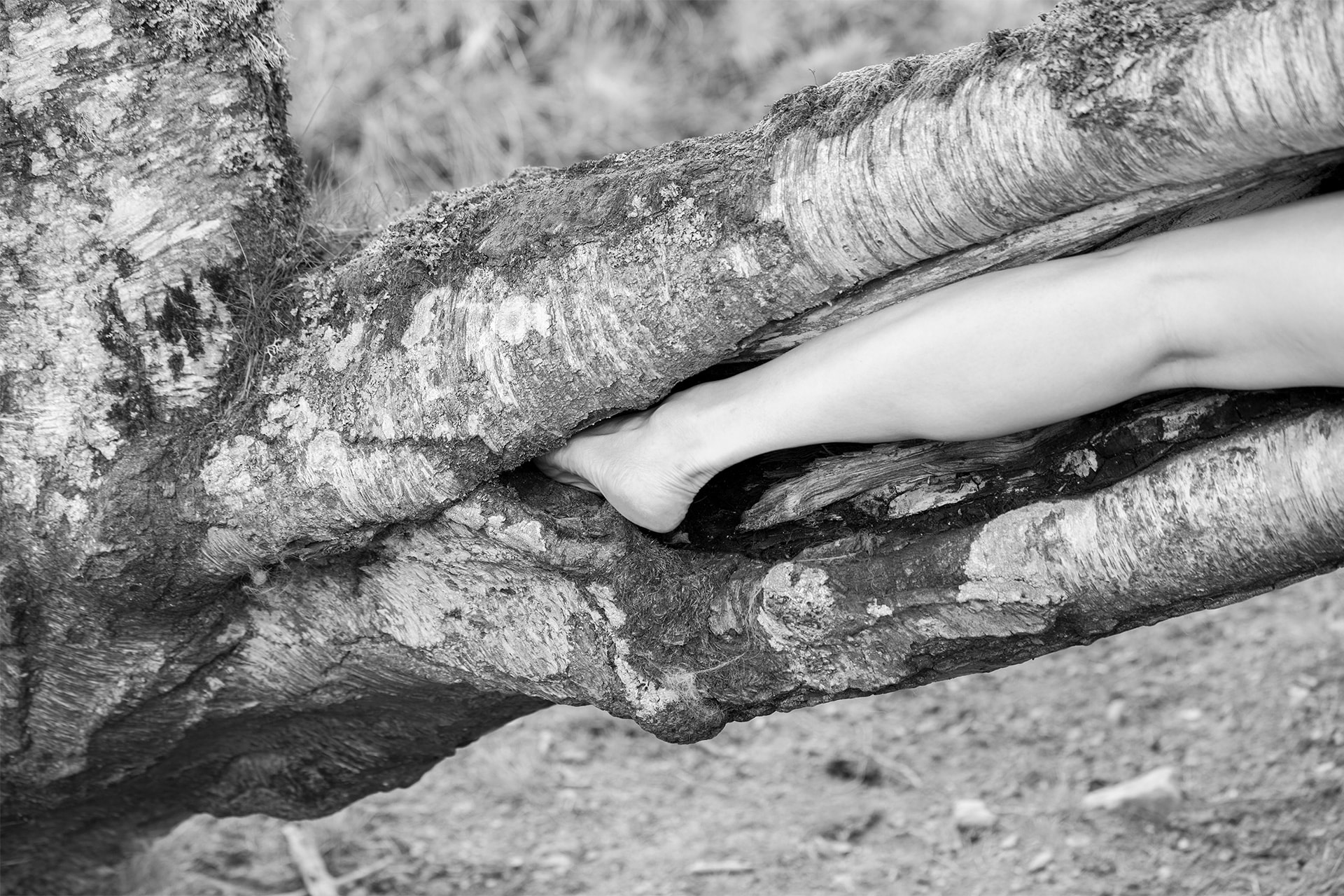
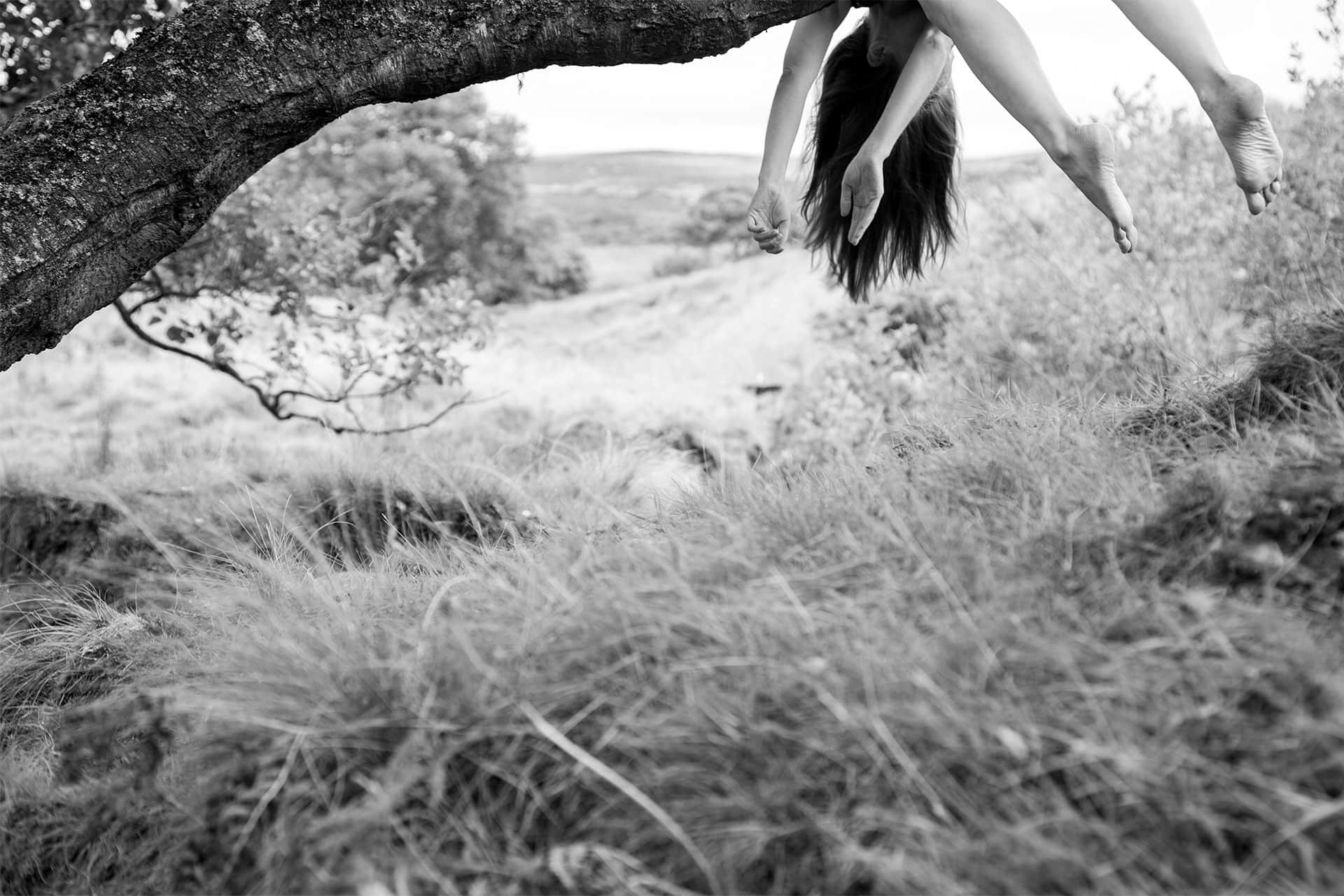
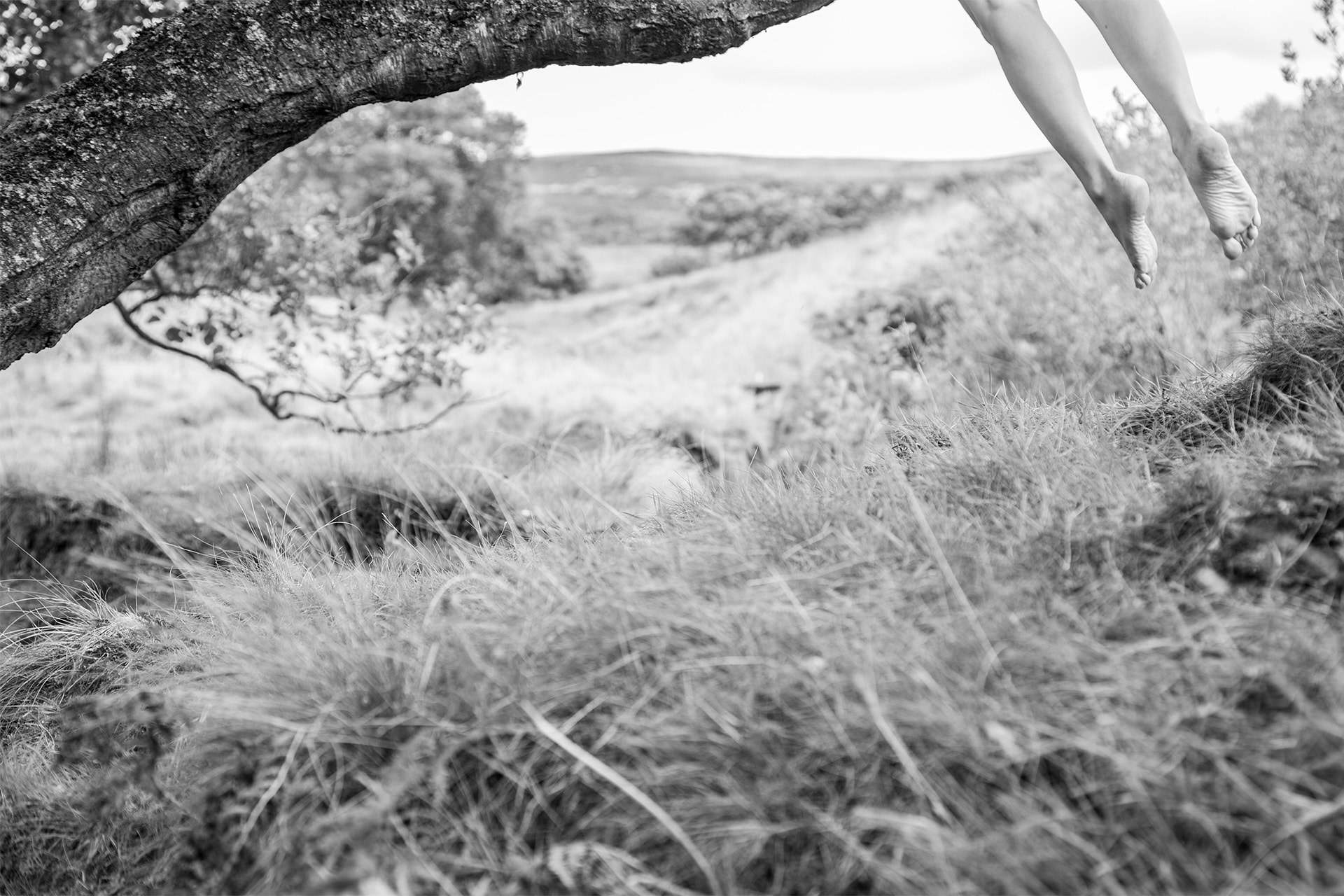
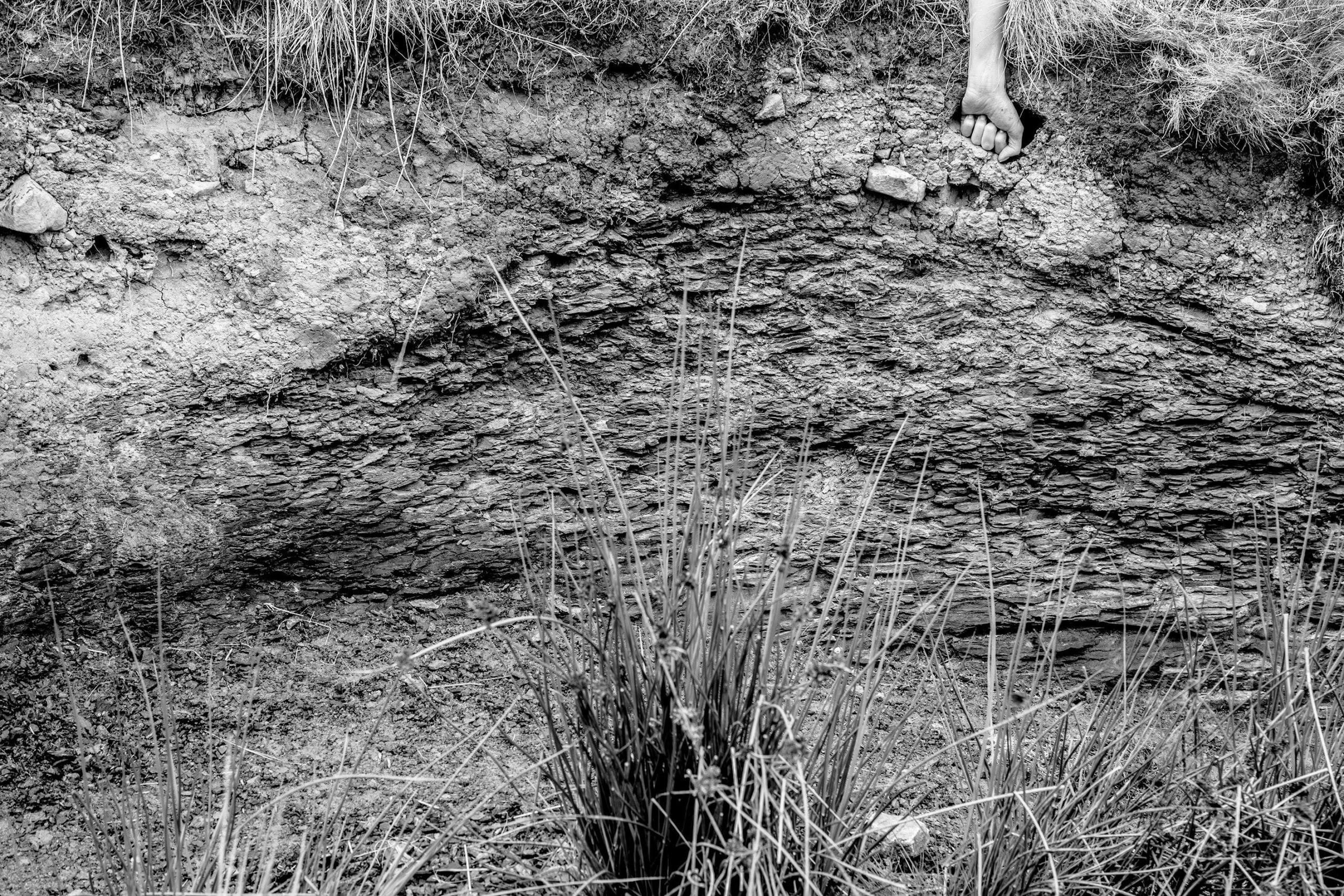
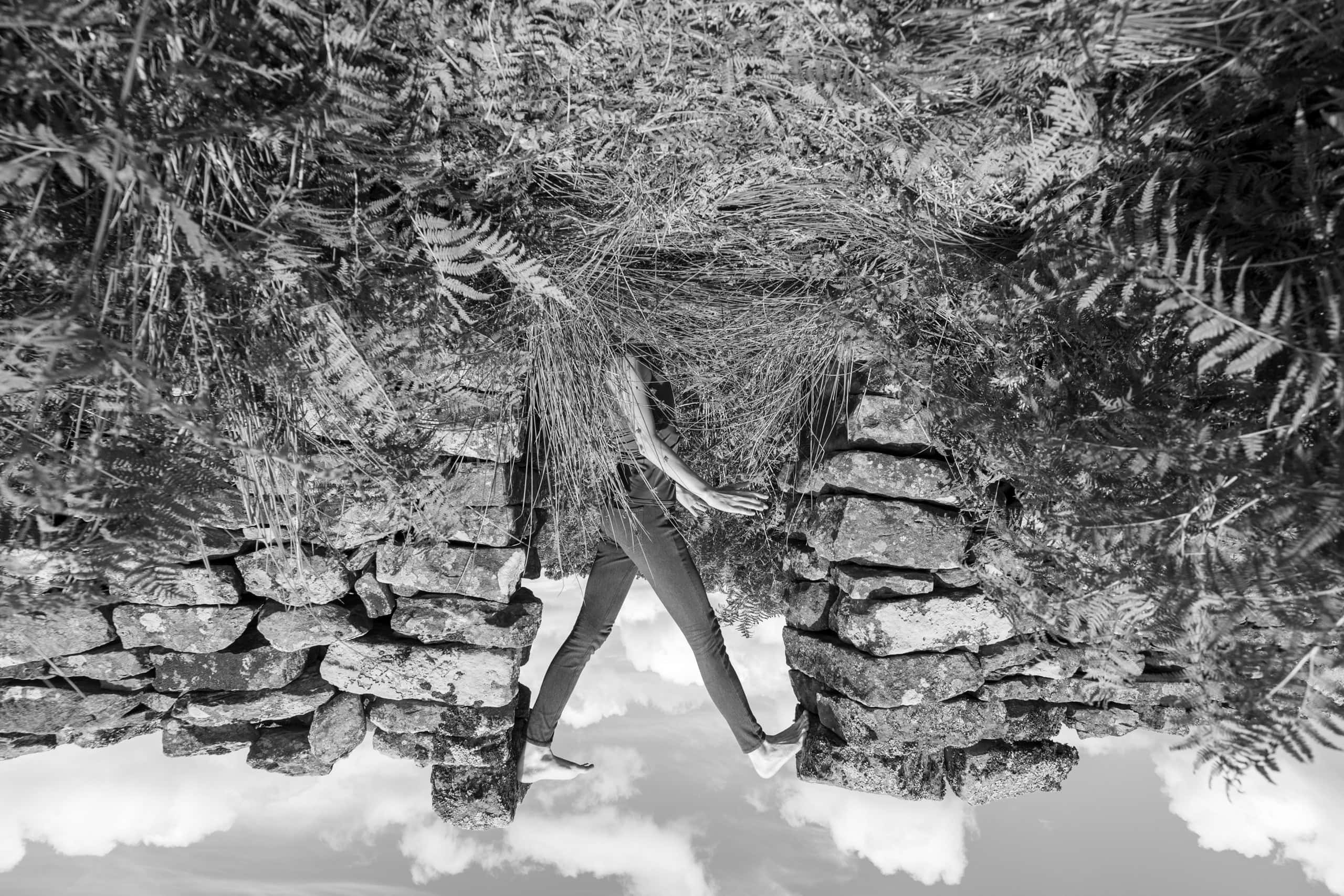
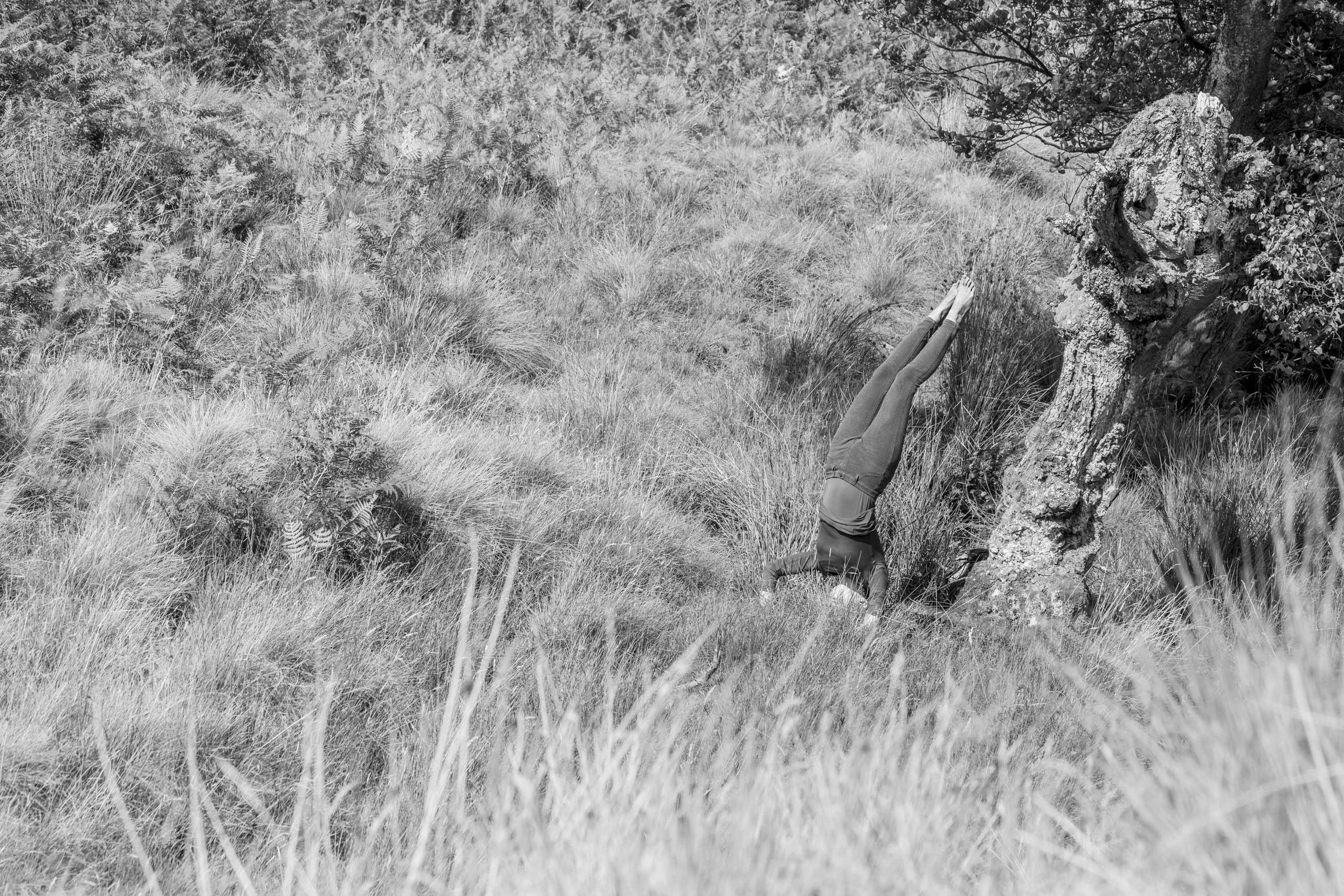
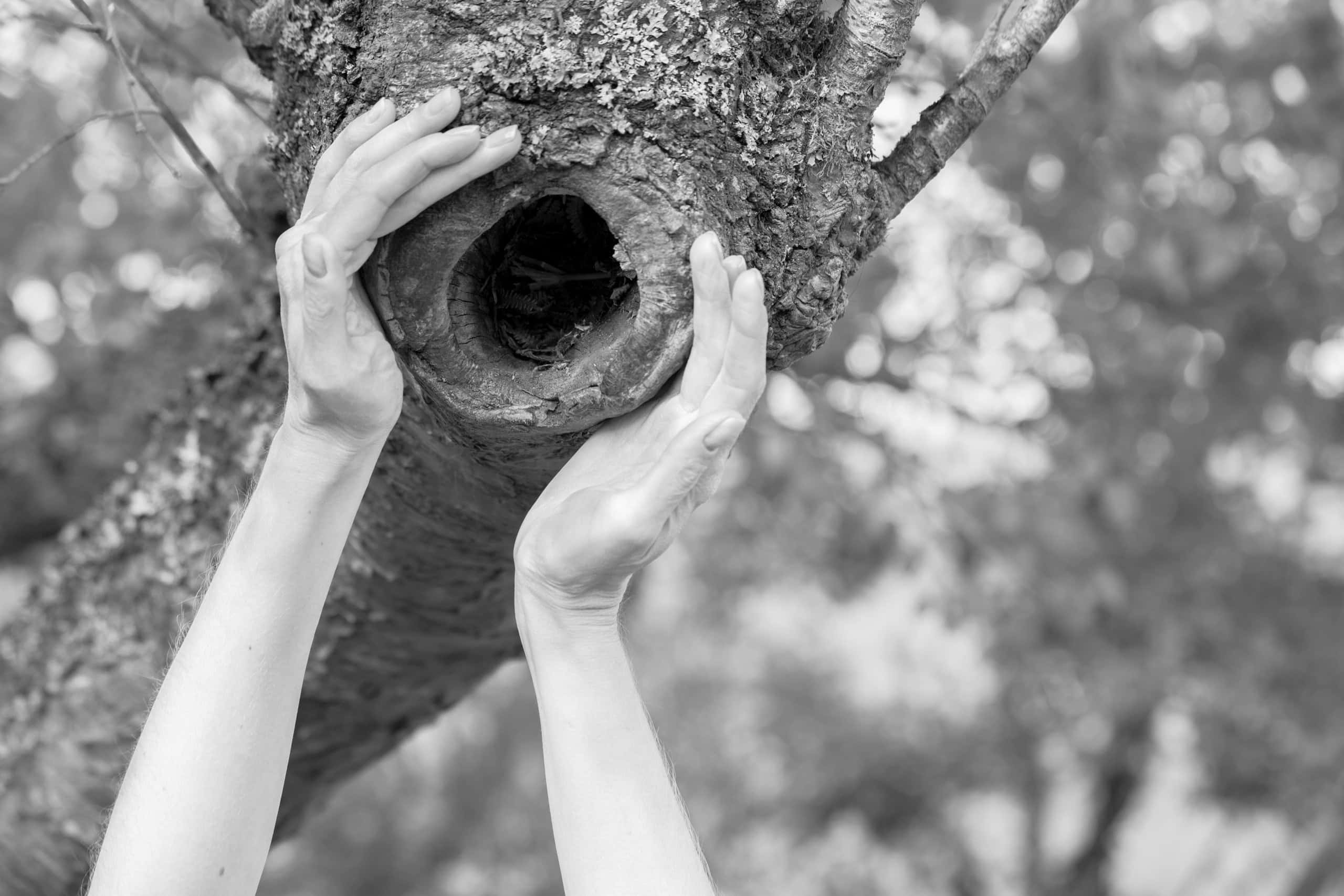
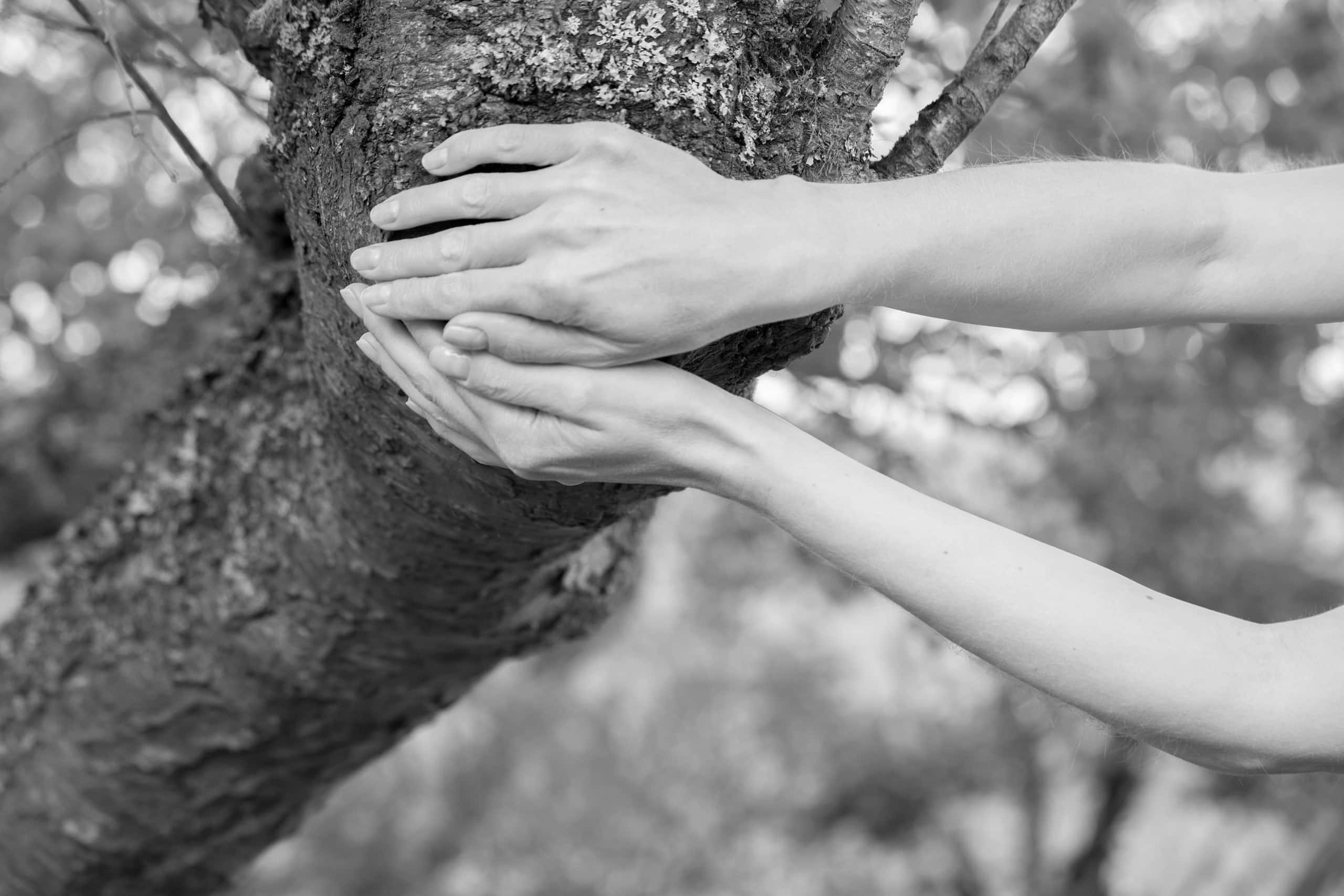
Through direct interactions with this wounded environment, I engaged my own body as a prosthesis capable of supporting, replenishing, or soothing devastated fragments of nature. In a series of performative gestures, I diagnosed and reconstructed damaged, burnt, or cracked plants and exposed geological strata, attempting to comfort these wounded elements with my body while drawing attention to the urgent need to prevent further ecological destruction.
__
Using movement and simple gestures, I explored the conditions and needs of a traumatised environment without disturbing the structure and order of its surroundings. I replaced broken branches and missing parts of burnt trees with parts of my own body; I supported withered branches and slipping slopes, and filled cracks, crevices, and gaps in abandoned animal shelters. For brief moments, nature and the body merged and coexisted in a fragile symbiosis. My ephemeral performances were documented in black-and-white photographs.
Over the following seven years, I regularly returned to Highgreen Valley to investigate the history and geology of the area. I conducted conversations with landowners and former mine workers, studied local archives, maps and produced a photographic series documenting the present condition of the landscape, creating botanical collections that function as contemporary herbariums.
Caring for a landscape strained by the mining industry became an essential part of the process of soothing my own body. Through these actions, I searched for forms of non-verbal, affective communication and a shared choreography between two vulnerable organisms.
The project outcomes included an artist talk and an expert panel organised by VARC and van Rij Gallery. Additionally, at the Van Rij Gallery exhibition in Kraków (2025), around a dozen photographs was displayed, carefully selected from the full collection of 45 images.
The research images were awarded by the University College London Doctoral School and longlisted for the Aesthetica Magazine Art Prize. Project was implemented as part of the EU Recovery and Resilience Plan Scholarship.
__
__
Digital version of the project catalogue.
Editors:
Magdalena Ujma
Małgorzata Dawidek
Analytical text:
Luiza Nader
Design:
Anna Pol-Pawrowska
Publisher:
van Rij Gallery
Kraków 2025